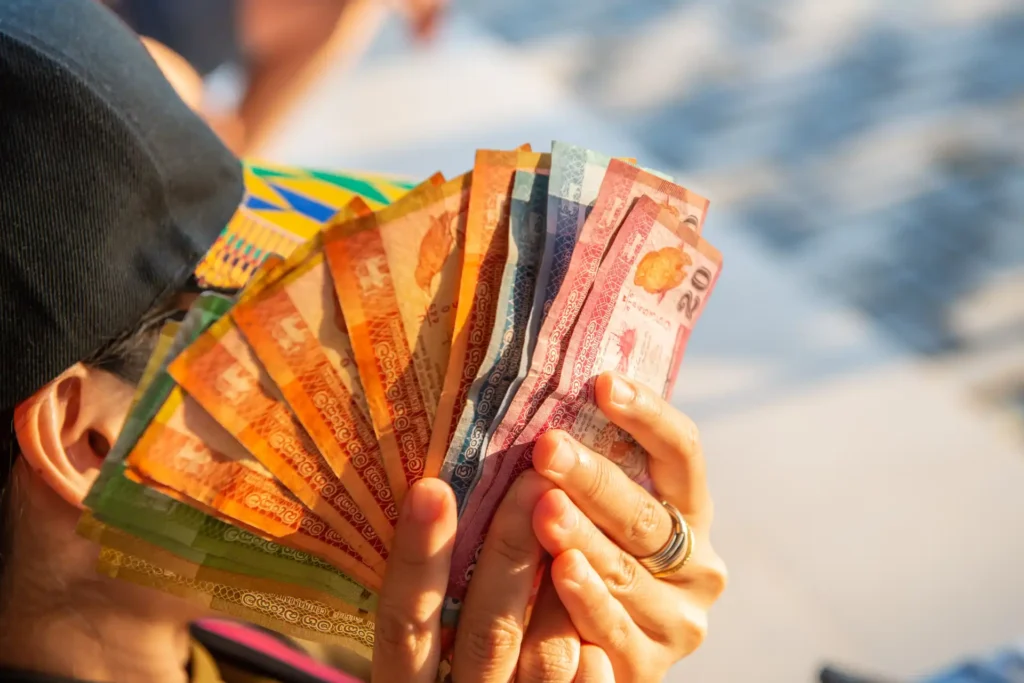

Beyond rupees: 5 fun Sri Lanka currency facts
Planning a Sri Lanka trip? Between the beaches, tea country, temples, tuk-tuks and curry, it’s easy to forget about the practical stuff.
But sorting your Sri Lanka currency before you go can make your arrival much smoother.
The currency of Sri Lanka is the Sri Lankan rupee, and it’s the money you’ll use for food, taxis, tips, markets, local shops and most day-to-day spending.
This guide covers the currency in Sri Lanka, a little history, some genuinely fun facts, and how to get Sri Lankan rupees before your trip.
Quick facts: Sri Lankan rupee (LKR)
| Code | LKR |
| Symbol | Usually written as Rs |
| Where used | Sri Lanka |
| Issued by | Central Bank of Sri Lanka |
| Common banknotes | Rs 10, Rs 20, Rs 50, Rs 100, Rs 200, Rs 500, Rs 1,000, Rs 2,000 and Rs 5,000 |
| Common coins | Rs 1, Rs 2, Rs 5 and Rs 10 coins are the most useful |
| Best currency to take | Sri Lankan rupees for everyday spending, with a bank card or credit card as backup |
| Simple tip | Buy some Sri Lankan rupees before you travel, then use cards, ATMs or authorised exchange services as backup |
What is the main currency of Sri Lanka?
The official currency of Sri Lanka is the Sri Lankan rupee. Its currency code is LKR, and prices are usually shown with Rs.
One rupee is divided into 100 cents, although cents are not especially useful for most visitors. In real life, you’ll mostly use Sri Lankan rupee banknotes and coins.
The singular is rupee, and the plural is rupees, so that you might say one Sri Lankan rupee, or 5,000 Sri Lankan rupees.
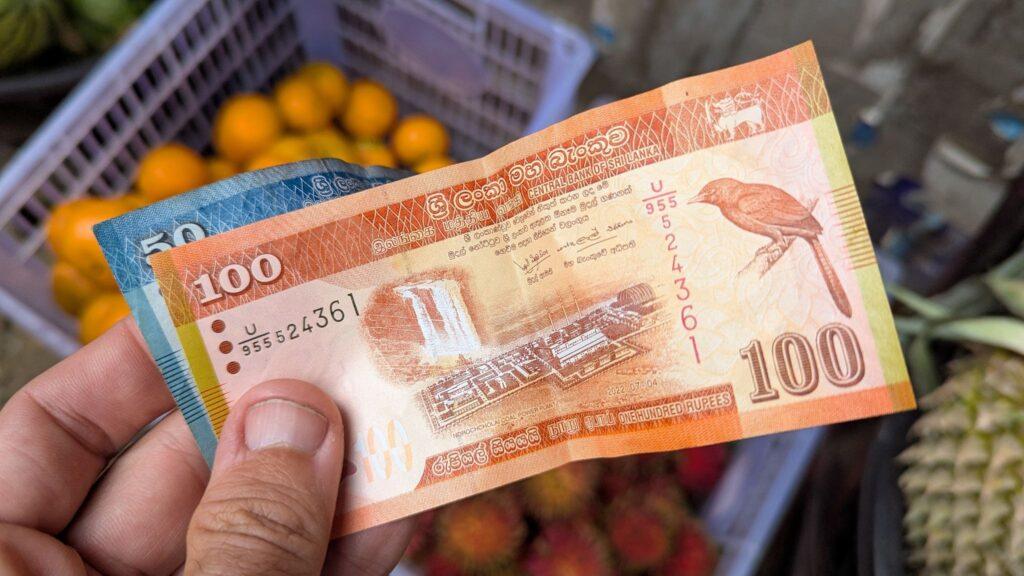
5 fun Sri Lanka currency facts
1. The rupee goes back to when Sri Lanka was called Ceylon
Before Sri Lanka became known by its current name, the island was called Ceylon.
The country became Sri Lanka in 1972, but the rupee continued as the national currency.
That makes the Sri Lankan rupee a small everyday link to the island’s past, from colonial trade and independence to modern Sri Lankan culture.
2. Sri Lankan banknotes are tiny art galleries
Sri Lankan banknotes are colourful, detailed and full of local character.
The current note series includes themes such as development, prosperity and Sri Lankan dancers.
You’ll find wildlife, landscapes, culture and national identity woven into the designs.
They’re designed for spending, of course, but they’re also a pocket-sized view of the country.
3. Sinhala and Tamil both appear on the money
Sri Lanka has two official languages, Sinhala and Tamil, and the country’s banknotes reflect that.
This gives the notes a strong sense of place. They are not just generic currency. They carry language, design and cultural details that connect them directly to Sri Lanka.
4. Sri Lanka once issued a plastic banknote
In 1998, Sri Lanka issued a special Rs 200 commemorative polymer note to mark 50 years of independence.
Polymer notes are made from a plastic-like material rather than traditional paper.
This note was not the start of everyday plastic money in Sri Lanka, but it is a fun little moment in the country’s currency history and an interesting detail for banknote collectors.
5. Coins exist, but notes do most of the holiday work
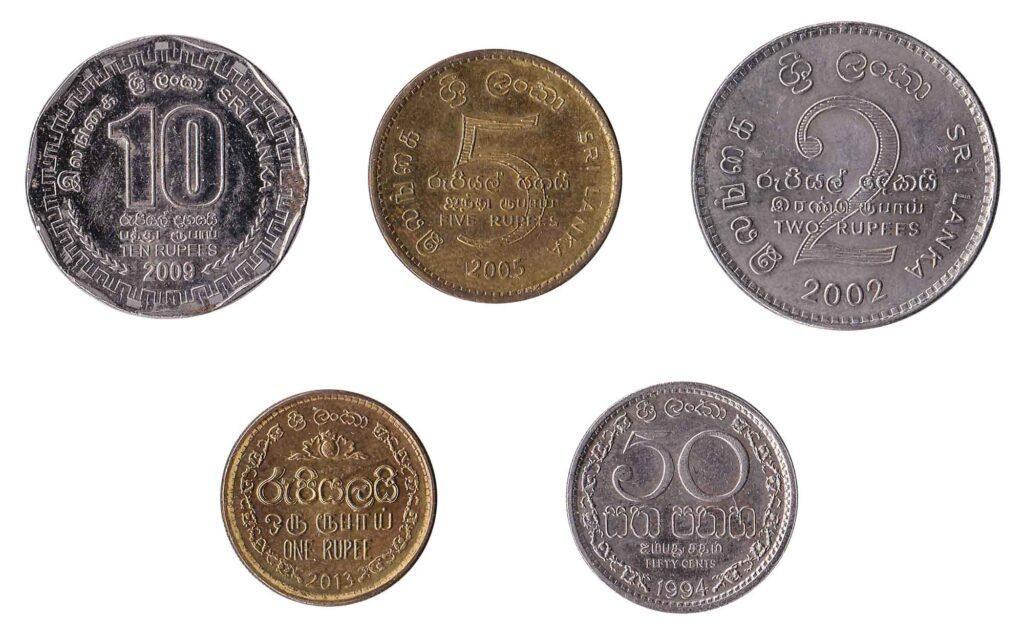
Sri Lankan coins include denominations such as Rs 1, Rs 2, Rs 5, and Rs 10. Smaller cent coins also exist, but they are not something most travellers will use much.
For a holiday, banknotes are the main event. Keep a mix of denominations so you can pay for small purchases without waving around a large note for a tiny bill.
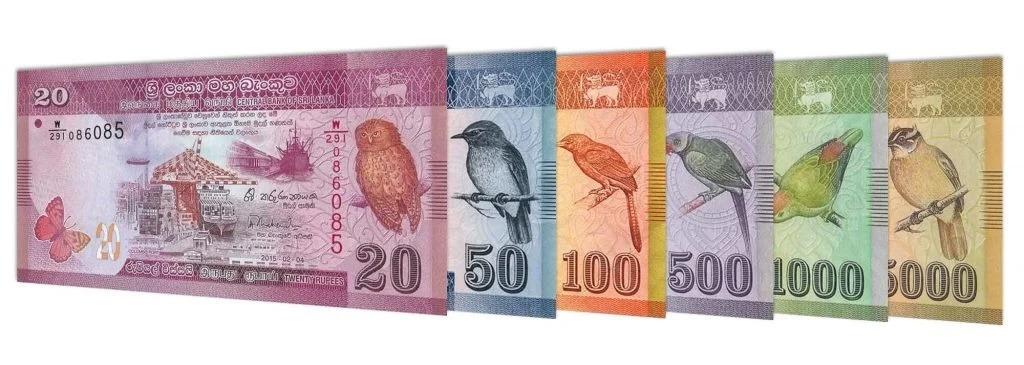
Sri Lankan banknotes and coins
The Central Bank of Sri Lanka issues Sri Lankan rupee banknotes. Current notes include Rs 10, Rs 20, Rs 50, Rs 100, Rs 200, Rs 500, Rs 1,000, Rs 2,000 and Rs 5,000.
Coins include Rs 1, Rs 2, Rs 5 and Rs 10, along with smaller cent coins.
For travellers, the most useful cash is usually a mix of mid-value notes, higher notes for larger purchases, and smaller notes or coins for tips, snacks and local transport.
Is the Sri Lankan rupee a closed currency?
The Sri Lankan rupee is not best described as a fully closed currency, but it is controlled.
There are rules on how much local currency travellers can bring in or take out of the country.
Official foreign exchange guidance states that people arriving in or leaving Sri Lanka may carry up to Rs 20,000 in Sri Lankan currency. That’s roughly £46, based on the rate on 13 May 2026.
So, it’s sensible to take some local cash for arrival costs, but not your whole holiday budget in rupees.
What is the best currency to bring to Sri Lanka?
The best currency to use in Sri Lanka is the Sri Lankan rupee, because it is the local currency and legal tender across the country.
Other currencies, such as the US dollar or British pound, may be exchangeable in Sri Lanka, but they are not a replacement for local cash.
For a local restaurant, tuk-tuk, market, small shop, temple visit, a bottle of water, or a quick snack, rupees are the practical option.
Do I need cash in Sri Lanka?
Yes. Bank cards are useful, but cash still matters.
You’ll want Sri Lankan rupees for tuk-tuks, tips, food stalls, small shops, local buses, markets, temples and smaller guesthouses.
Cash is especially useful if you’re travelling outside big towns or heading into more rural areas.
Keep smaller notes handy, because changing high-value notes can be awkward in smaller establishments.

Can I use bank cards in Sri Lanka?
Yes, you can use bank cards in Sri Lanka, especially at hotels, larger restaurants, supermarkets and shops in tourist areas. Visa and Mastercard are generally the most useful cards to carry.
However, card acceptance is not universal. Smaller shops, local restaurants, markets and remote areas may prefer cash.
Your bank may also charge fees when you pay abroad, and paying in pounds instead of rupees can lead to unfavourable exchange rates.
When offered the choice, paying in local currency is usually better than letting a card machine convert the price into GBP.
Sri Lanka rupee currency exchange rate: what to know
The Sri Lanka currency exchange rate can change regularly, so it’s worth checking the Sri Lankan rupee exchange rate today before you buy.
A currency converter can help you understand the GBP to LKR exchange as a rough guide, but it may show a mid-market rate rather than the price available for physical travel money.
The British pound exchange rate, provider costs, availability and fees can all affect the final amount of rupees you receive.
For the clearest comparison, check the total amount of Sri Lankan rupees you’ll get for your pounds, not just the headline rate.
How far does your money go in Sri Lanka?
Sri Lanka can be good value for UK travellers, especially if you enjoy local food, public transport and simple guesthouses.
Your costs will vary depending on where you stay, how you travel and whether you stick to local spots or spend more time in hotels and tourist areas.
Local meals, buses, trains and small shops can be affordable, while private drivers, guided tours, beach resorts and popular tourist routes can cost more.
Keeping some Sri Lankan rupees handy makes it easier to pay for snacks, drinks, tips, tuk-tuks and smaller everyday purchases.
If you get back from your trip with leftover travel cash, let Manor FX help you convert Sri Lanka currency to pounds.
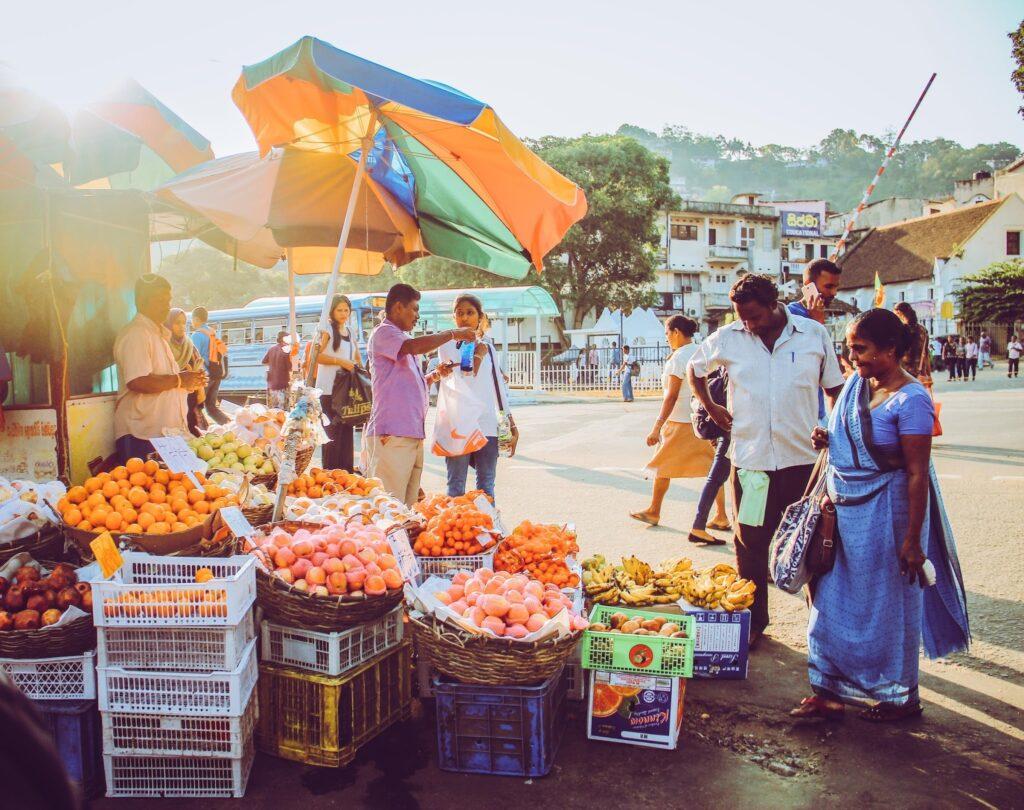
Can I buy Sri Lanka rupees in the UK?
Yes, you can buy Sri Lankan rupees in the UK from Manor FX.
Sri Lankan rupees are not always as easy to find as euros, US dollars or other widely stocked currencies, so planning ahead helps.
Manor FX lets you order Sri Lankan rupees online for secure delivery, or collect your currency from our bureau near Heathrow.
That way, you can arrive with cash ready for taxis, tips, snacks, water and your first meal after the flight.
Where is the best place to get Sri Lankan currency?
The best place to get foreign currency for Sri Lanka is a provider like Manor FX that clearly shows the LKR exchange rate, the amount you’ll pay in pounds, and the amount of Sri Lankan rupees you’ll receive.
With Manor FX, you can buy Sri Lanka currency online and review the order before checkout.
You can also visit the Manor FX store near Heathrow if you prefer to exchange in person.
That transparency helps you compare the real cost, rather than being distracted by headline rates or hidden fees.
Buy your rupees now
Where to buy Sri Lankan rupees in the UK
| Option | What to expect |
| Specialist bureau (online) | The simplest option for less common currencies: compare rates and order ahead. Get the best rates and swift home delivery with Manor FX. |
| High street banks | Some currencies may need ordering in advance; availability can vary by branch. |
| Post Office | Stocks a range of travel money, but less common currencies may be limited or unavailable. |
| Airport exchange | Convenient, but higher costs; stock of rarer currencies can be unpredictable. |
How to get Sri Lankan rupees with Manor FX
Getting Sri Lankan travel money with Manor FX is simple.
Choose Sri Lankan rupee on the Manor FX website, enter how much you want to exchange, then check the rate, order total and delivery or collection details before you pay.
You can order Sri Lankan rupees online for secure delivery or collect from the Manor FX bureau near Heathrow.
That means you can save money and arrive prepared, with local currency ready for your first day.
How do you convert Sri Lanka currency to GBP?
If you come home with leftover rupees, you may want to convert Sri Lankan rupees back to pounds.
The LKR to GBP exchange rate is usually different from the rate you paid when buying rupees, because buy and sell rates are not the same.
Manor FX can help you convert Sri Lankan rupees to GBP when you return, so your leftover travel money doesn’t sit in a drawer until your next trip.

FAQs
Can I use Indian rupees in Sri Lanka?
No. You cannot use Indian rupees for normal payments in Sri Lanka.
The official currency is the Sri Lankan rupee, so visitors should use local currency for everyday spending.
Are Sri Lankan rupees widely accepted outside Sri Lanka?
No. Sri Lankan rupees are not widely accepted outside Sri Lanka.
It’s best to use them during your trip or exchange leftover rupees back into pounds when you return with Manor FX.
Can I pay in US dollars in Sri Lanka?
US dollars (USD) may be accepted in some tourist settings or for certain services, but they are not the everyday currency.
The best currency for Sri Lanka is the Sri Lankan rupee (LKR).
Is Sri Lanka cheap for UK travellers?
Sri Lanka can be affordable, especially for local food, public transport and simple accommodation.
Costs rise in popular tourist areas, hotels and private tours, so your budget will depend on how you travel.
Should I exchange money before travelling to Sri Lanka?
Yes, it’s sensible to take some Sri Lankan rupees before you travel.
Because the local currency limit is low, take enough for arrival costs and early spending, then use debit cards, ATMs or authorised exchange services as backup.