
South African currency: rand notes, rates and travel tips
South African currency is the South African rand.
If you’re travelling to South Africa from the UK, it’s worth understanding how the rand works, what banknotes and coins look like, and whether cash or card is best before you go.
This guide covers the currency in South Africa, South African rand exchange rates, how to think about South Africa currency to GBP, and how to buy South African rand currency before your trip.
Quick facts: South African currency
| Currency of South Africa | South African rand |
| Code | ZAR |
| Symbol | R |
| Subunit | Cents (100 cents = 1 rand) |
| Common banknotes | R10, R20, R50, R100 and R200 |
| Common coins | 10c, 20c, 50c, R1, R2 and R5 |
| Where used | South Africa |
| Cash vs card | Cash is widely used; cards are more common in larger hotels/restaurants in big tourist areas |
| Simple tip | Buy South African currency before you travel so you have local cash ready when you arrive |
What is the currency in South Africa?
The currency of South Africa is the South African rand.
Its currency code is ZAR, and the symbol is R. You may see it written as South African rand, South African rand ZAR, rand currency or simply rand.
They all refer to the same legal tender used for cash payments, prices, shops, transport, restaurants, hotels and everyday spending across South Africa.
Why is South African money called the rand?
The rand was introduced in 1961, the same year South Africa became a republic.
Its name comes from the Witwatersrand, the gold-rich ridge where Johannesburg developed.
That gives South African currency a strong link to the country’s mining history, gold trade and economic story.
The rand replaced the South African pound and became the official currency of South Africa.
South African rand banknotes and denominations
The South African Reserve Bank issues South African rand banknotes.
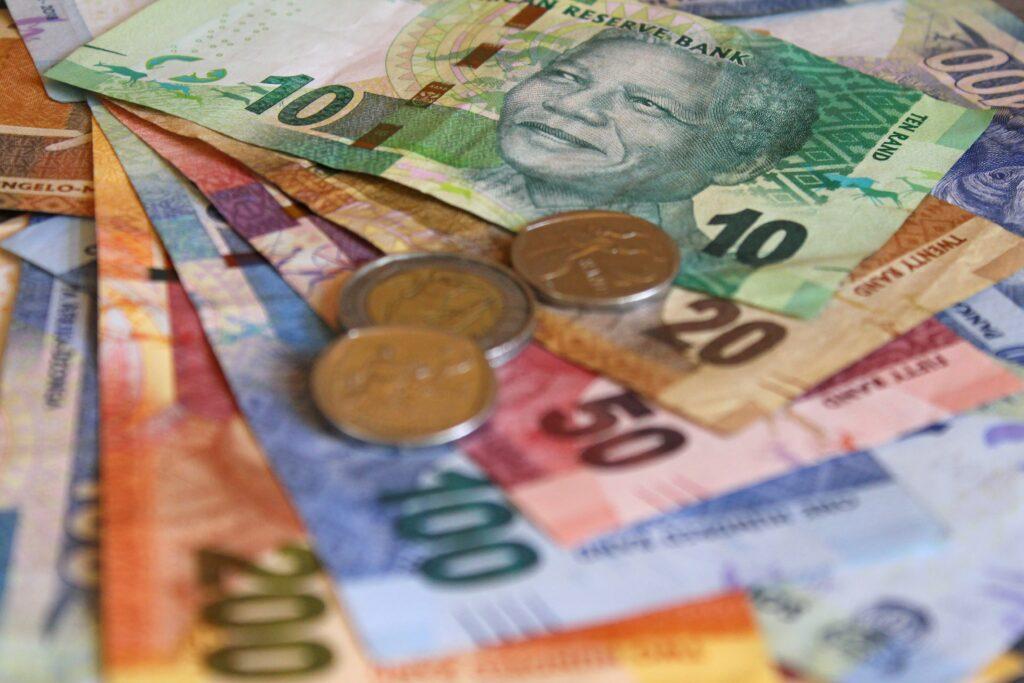
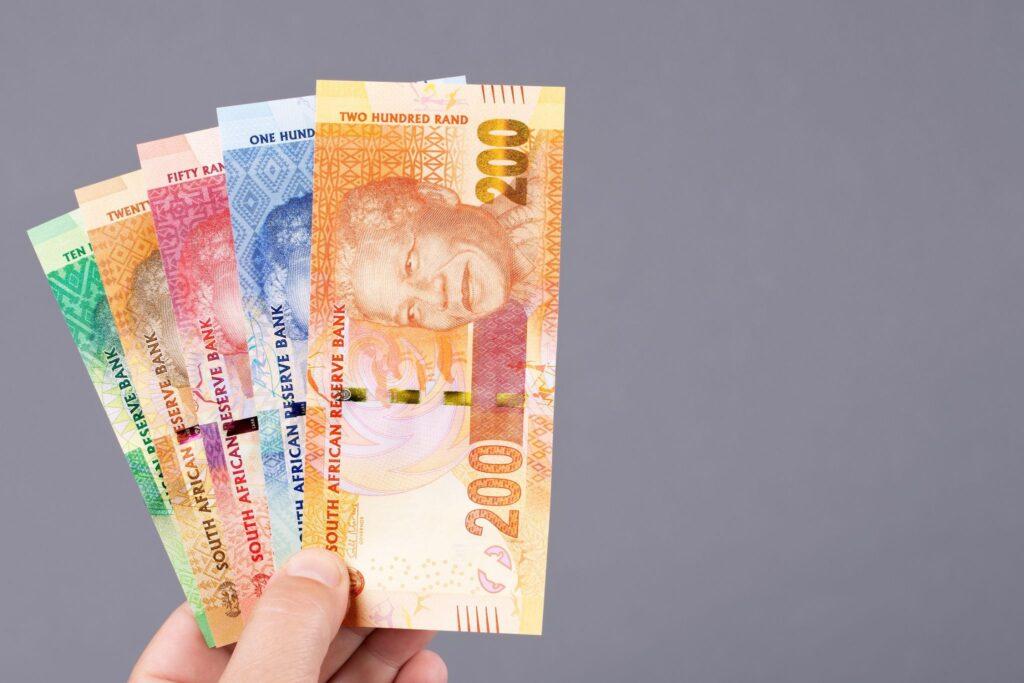
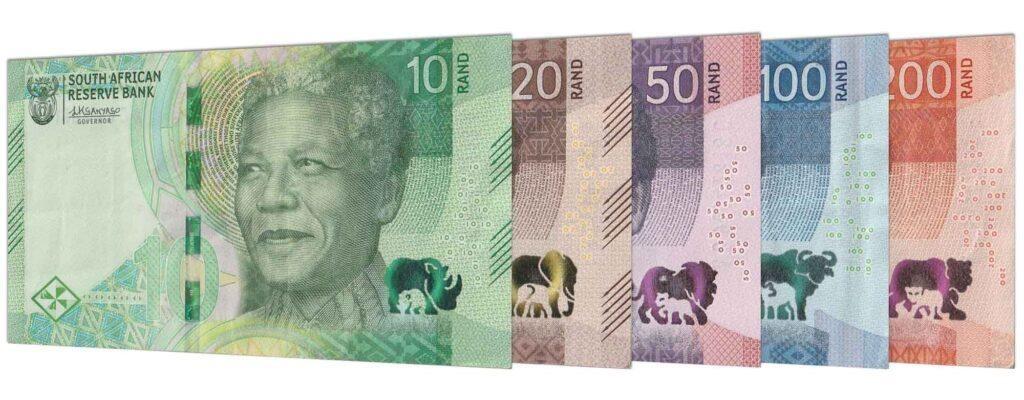
There are five main banknotes in circulation: R10, R20, R50, R100 and R200.
The South African Reserve Bank says all South African banknotes are printed on cotton substrate and can be identified by colour, size and animal theme.
Modern South African banknotes feature Nelson Mandela on the front. Updated Mandela banknotes and the fourth decimal coin series were released in 2023 with new designs and enhanced security features.
For travellers, it’s useful to carry a mix of denominations. Larger notes are helpful for bigger payments, while smaller notes are better for tips, taxis, cafés, markets, parking attendants and local purchases.
South African rand coins
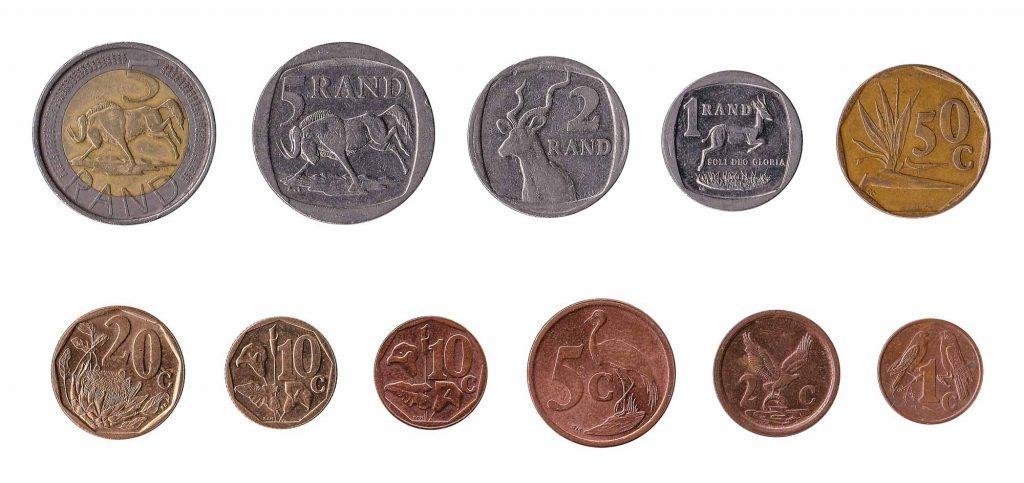
South African coins are useful for small payments.
Current coins include cent coins and rand coins, including R1, R2 and R5. You may use coins for tips, parking, snacks, local transport and small everyday purchases.
Banknotes are more important for most UK travellers, but having some smaller coins and notes can make day-to-day spending easier.
South Africa currency rate explained
The South African currency rate changes regularly because currency markets move.
Inflation, interest rates, commodity prices, political news, tourism, economic data and demand for foreign currency can all affect the South African rand exchange rate.
If you’re planning ahead, checking rates over 30 days or 90 days can help you understand recent movement.
But try not to obsess over tiny changes. The useful question is whether the rate works for your travel budget.
Using a currency converter without getting misled
A currency converter can give you a guide to the South Africa currency exchange rate, but it may not show the full cost of getting travel money.
Before you order, compare:
- the exchange rate
- the final amount of rand you receive
- delivery fees
- commission
- card charges
- hidden fees
- whether the currency is available
The best comparison is the final amount of South African rand you receive for your pounds, not just the headline rate.

What is the best currency for South Africa?
The best currency for South Africa is the South African rand.
Pounds, euros and US dollars are not normally accepted for everyday spending.
In places like Cape Town, Johannesburg, Durban, safari areas and the Garden Route, you’ll usually pay in rand.
A debit or credit card is useful as a backup, but local currency is still handy for tips, taxis, markets, smaller shops and arrival expenses.
Should you use cash or card in South Africa?
A mix of cash and card is usually best.
You can use a card in South Africa in many hotels, restaurants, shopping centres, supermarkets and tourist areas. Card payments are especially common in Cape Town and other major cities.
Cash is still useful for tips, markets, parking attendants, local taxis, rural areas, small cafés and places where card machines may not work.
When using your card, choose to pay in local currency rather than pounds. This can help you avoid poor conversion rates.
Can you buy South African currency in the UK?
Yes, you can buy South African currency in the UK from Manor FX.
South African rand is a popular currency for UK travellers, but rates and availability can vary between providers.
Buying South African rand before you travel means you can arrive with local cash ready for your first taxi, coffee, tip or meal.

Where to buy South African rand in the UK
| Option | What to expect |
| Specialist bureau (online) | The simplest option for less common currencies: compare rates and order ahead. Get the best rates and swift home delivery with Manor FX. |
| High street banks | Some currencies may need ordering in advance; availability can vary by branch. |
| Post Office | Stocks a range of travel money, but less common currencies may be limited or unavailable. |
| Airport exchange | Convenient, but higher costs; stock of rarer currencies can be unpredictable. |
Buy your rands now
How to buy South African currency with Manor FX
Buying South African rand with Manor FX is straightforward.
Start by choosing South African rand on the Manor FX website.
Enter your details, choose how many pounds you want to convert, or how much rand you want to receive, then check the order total.
You can order online for secure delivery or collect from the Manor FX bureau near Heathrow.
If you want South African rand online before travelling to South Africa, Manor FX makes it easy to buy South African currency and arrive with cash ready.

Can I convert South African currency to pounds sterling?
Yes. If you return with leftover rand, Manor FX can help you exchange South African currency back to GBP.
Choose “sell currency” and select ZAR South African rand to see the current rate.
This is useful if you want to convert unused travel money after your trip.
South Africa currency to GBP: what to know
South Africa currency to GBP rate tells you how much your rand is worth in pounds.
This matters if you come home with leftover rand and want to exchange it back into sterling.
The rate for buying South African rand and the rate for selling rand back are usually different.
That’s normal for foreign exchange, because providers use separate buy and sell rates.
South African currency and travel safety
Cash is useful, but carry it sensibly.
Avoid carrying more rand than you need for the day. Split your money between your wallet, bag and hotel safe. Keep smaller notes separate for tips and local payments.
A backup card, some local cash and a sensible plan are usually better than relying on one payment method.

FAQs
No, pounds are not normally accepted for everyday spending in South Africa. Use South African rand for shops, taxis, tips, restaurants and local payments.
Take enough rand for your first few days, arrival transport, tips and smaller expenses. Use a card as backup for larger purchases.
It depends where you go. Cape Town, safari lodges and tourist areas can be pricier, but local restaurants, markets and self-catering can offer good value.
Yes, if you bring more than 25,000 rand per person, or foreign currency worth more than 10,000 US dollars, you must declare it.
No, Manor FX provides travel money and currency exchange for cash orders, not international money transfer services. If you’re sending money to South Africa, compare specialist transfer providers carefully and check their fees, exchange rates and regulation before you send.