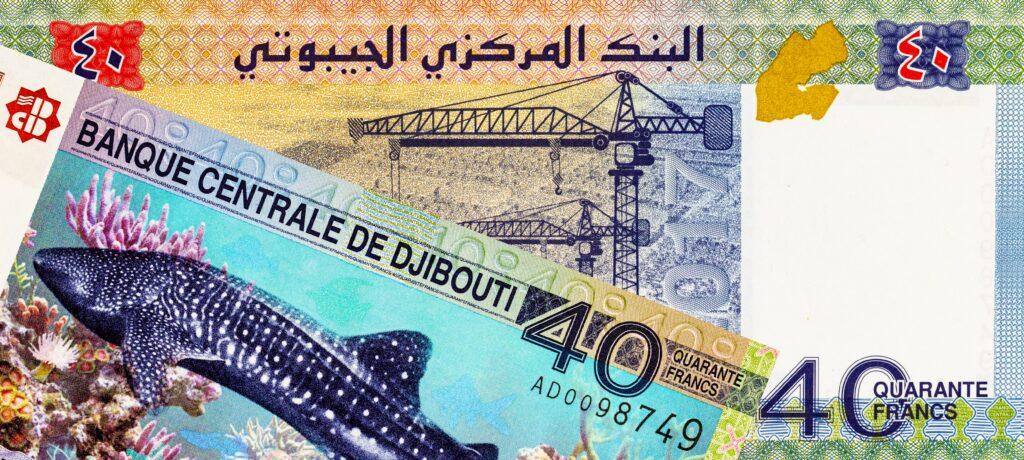

Djibouti currency explained without the jargon
The currency in Djibouti is the Djiboutian franc (DJF). You’ll often see it written as Fdj.
The DJF is pegged to the US dollar.
This guide covers the currency essentials without jargon – what DJF is, the notes and coins you’ll use, and how to avoid unnecessary conversion fees when sorting your travel cash.
Quick facts: Djiboutian franc (DJF)
| Currency name | Djiboutian franc |
| Code | DJF |
| Symbol | Fdj (commonly shown) |
| Peg | Fixed peg to the US dollar (USD) |
| Common banknotes | 1,000; 2,000; 5,000; 10,000 francs |
| Common coins | 1, 2, 5, 10, 20, 50, 100, 250, 500 francs |
| Cash vs card | Cash is useful for day-to-day spending; cards may work more in larger urban businesses |
| Simple tip | If a card terminal offers to charge you in GBP, choose DJF to avoid extra conversion fees |
What is the currency in Djibouti?
The currency of Djibouti is the Djiboutian franc.
In everyday terms, that means your money in Djibouti will usually be handled in francs, not in pounds, euros, or dollars, even if some hotels or travel settings may mention the dollar for reference.
For day to day spending, the best currency for Djibouti is usually the local one.
Meet the Djiboutian franc
The Djiboutian franc has been the official currency since 1949. It replaced the French franc, and it has remained central to the economy ever since.
In Djibouti, the Djiboutian franc is part of daily life, from paying for meals and taxis to handling cash purchases in shops and markets.
From French Somaliland to independence
To understand the currency today, it helps to look briefly at the past.
During the era of French Somaliland, the French franc circulated in the territory.
The Djiboutian franc later emerged as a separate monetary unit, and after independence in 1977, the country kept its own franc rather than joining another regional currency system.
That long history with France helps explain why Djibouti’s older currency history often sounds a little different from elsewhere in Africa.
The currency code and symbol to know before you go
When you check a currency converter, a rate page, or a card statement, look for the DJF rate. That is the official currency code for the Djiboutian franc.
You may also see Fdj used as the Djibouti currency symbol.
Knowing both makes it easier to read a GBP chart, compare providers, and avoid confusion when checking a Djibouti currency to pound quote or a Djibouti currency rate online.
Who manages the currency in Djibouti?
The central bank is the Banque Centrale de Djibouti, often referred to in English as the Central Bank of Djibouti.
It oversees monetary stability and the fixed relationship between the Djiboutian franc and the US dollar.
Djiboutian franc coins and banknotes in circulation
The Djiboutian franc comes in both coins and banknotes.
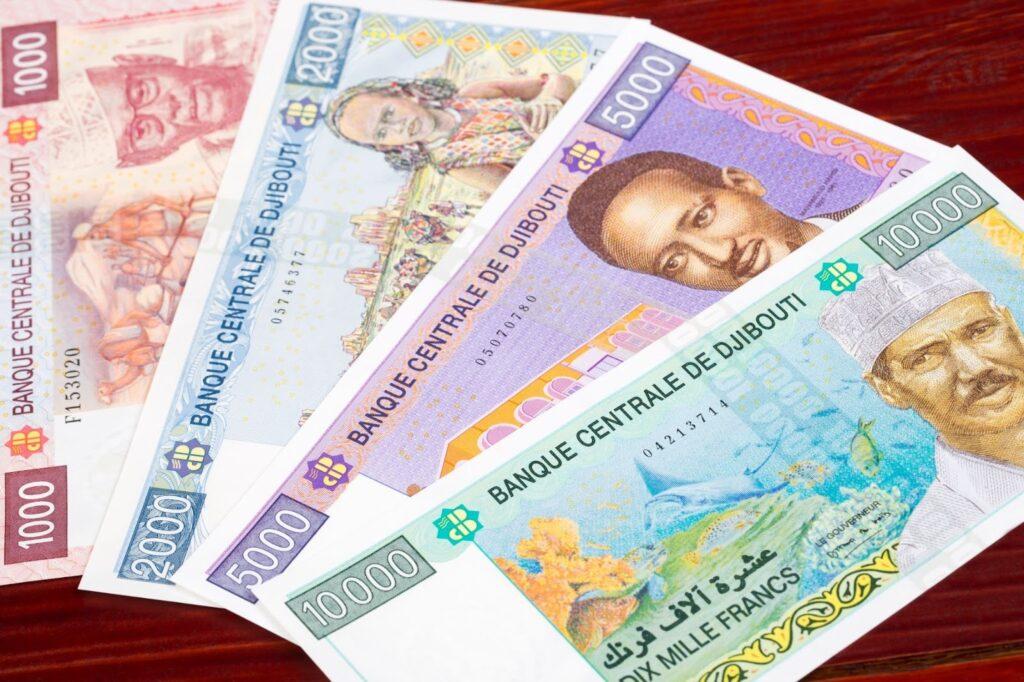
Common coins include 1, 2, 5, 10, 20, 50, 100, 250 and 500 francs, while commonly cited banknotes include 1,000, 2,000, 5,000 and 10,000 francs.
For travellers, the practical point is that smaller coins are useful for minor purchases, while larger banknotes are more common for handling larger amounts of money.
Why the Djiboutian franc is pegged to the dollar
The Djiboutian franc is pegged to the US dollar to keep the currency stable in a country that relies heavily on imports, port activity, and international trade.
Because Djibouti’s strategic location makes it an important regional trade hub, a fixed link to the dollar helps reduce sharp swings in value and makes pricing more predictable for businesses, travellers, and foreign investors.
It also helps the government, the central bank, and the wider Djiboutian economy by creating a more stable environment for payments and contracts.
Instead of the exchange rate fluctuating freely every day, the peg provides Djibouti with a steady monetary anchor that can support confidence in the currency.
What that means for the exchange rate
Because the Djiboutian franc is pegged to the dollar, its official exchange rate against the US currency stays fixed.
So when UK travellers look at the Djibouti currency exchange rate in GBP, the main movement usually comes from changes between the pound and the dollar, not from the Djiboutian franc moving on its own.
In simple terms, the local currency is designed to be stable. However, the rate you get in GBP can still rise or fall depending on wider global market movements, as well as any fees added by your bank or travel money provider.
GBP exchange rates and what they mean in practice
If you are tracking GBP exchange rates, focus on timing and total cost, not just a headline number.
A rate may look strong on paper, but your real value depends on delivery charges, card mark-ups, transfer costs, or other fees.
In other words, comparing the exchange rate matters, but comparing the whole deal matters more. That is how you stay on top of the true cost in GBP.
How to read a GBP chart before you buy
A GBP chart is useful for spotting direction, not for predicting the future.
If the pound has been firm against the dollar, that can improve the DJF price shown to UK buyers.
If sterling is declining, the value you get in francs may weaken.
A GBP chart is best used as a guide to trends and dates, while remembering that many sites only show indicative prices rather than the final rate you will actually lock in.
That is why a GBP chart should support your decision, not make it on its own.
When a currency converter is useful and when it is not
A currency converter is handy for a quick example.
It can show the rough Djibouti currency to pound relationship and help you estimate how many francs your GBP budget may buy.
But a currency converter does not always include all fees, delivery costs, or card charges.
It is useful for planning, but it is not always the same as a firm buying rate from real providers or your bank account.
Cash, cards and local spending in modern day Djibouti
For spending in Djibouti, it is wise to carry some cash in local currency.
In larger urban areas, you may be able to use your card more often, but in rural areas and smaller businesses, cash can still matter.
Always choose DJF as the local currency when a card terminal offers the option, as this can help you avoid unnecessary conversion fees.
Keeping a mix of card and cash is often the most practical approach.
How to avoid hidden fees when buying travel money
The biggest mistake with currency exchange is focusing only on the headline exchange rate.
Watch for hidden fees, poor card conversion rates, and extra bank charges.
Some providers look competitive until the final checkout screen.
To save money, compare the quoted exchange, the total cost in GBP, and whether the provider shows real time exchange rates or just broad exchange rates today.
A clear breakdown is usually better than a flashy promise.
Where to buy Djiboutian francs in the UK
| Option | What to expect |
| Specialist bureau (online) | The simplest option for less common currencies: compare rates and order ahead. Get the best rates and swift home delivery with Manor FX. |
| High street banks | Some currencies may need ordering in advance; availability can vary by branch. |
| Post Office | Stocks a range of travel money, but less common currencies may be limited or unavailable. |
| Airport exchange | Convenient, but higher costs; stock of rarer currencies can be unpredictable. |
Buy your francs now

How to get Djiboutian francs with Manor FX
If you want Djiboutian francs before you travel, the easiest route is to head to the Djiboutian franc page, choose how much GBP you want to convert, and check the live exchange details before you commit.
From there, you can review the total cost, compare the value against other providers, and choose delivery or collection depending on what suits your trip.
It is a more practical way to organise travel money than scrambling to exchange money after you land at the airport.
FAQs
What is the currency in Djibouti?
The official currency in Djibouti is the Djiboutian franc (DJF).
Does Djibouti use dollars?
Djibouti does not use the dollar as its official currency, even though the Djiboutian franc is pegged to the US dollar. However, in some places, especially in tourist areas or for larger purchases, dollars are accepted.