
Ghana currency GHS: What every traveller should know
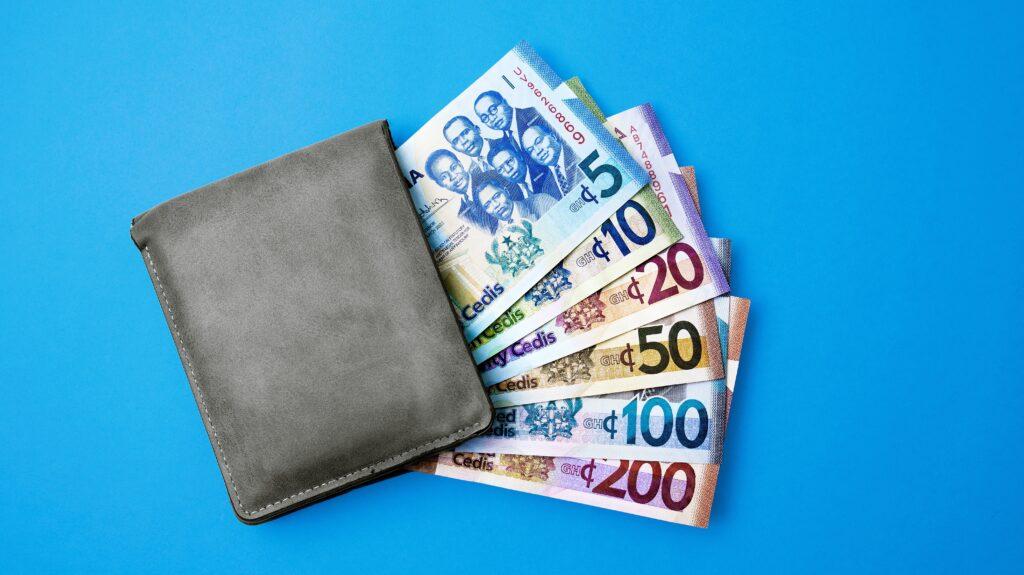
The official currency of Ghana is the Ghanaian cedi, identified by the code GHS and the symbol GH₵ or ₵.
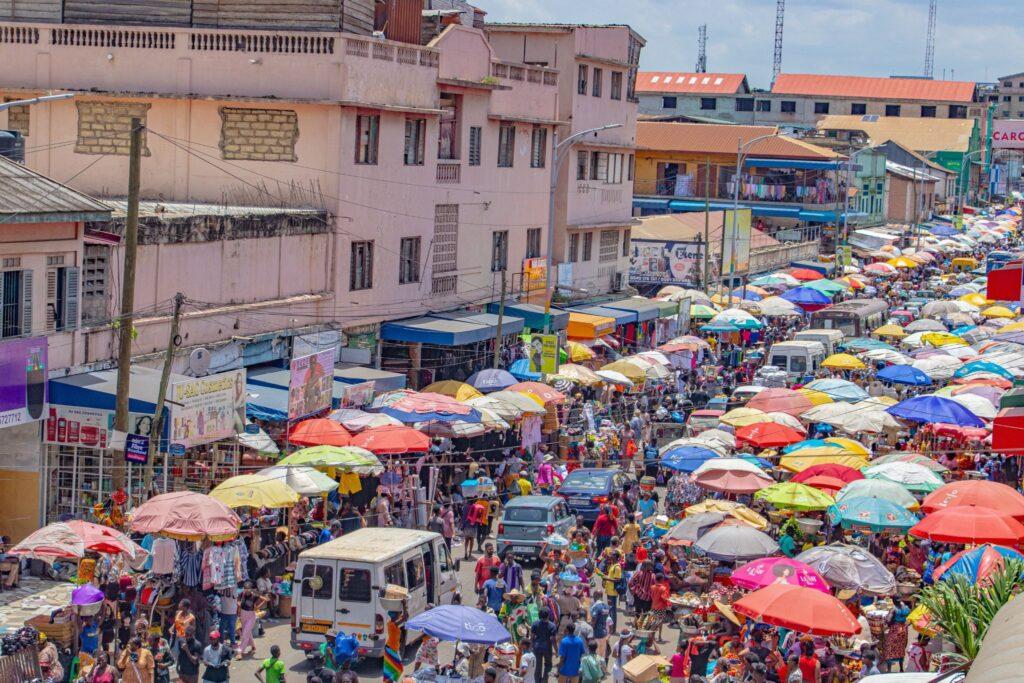
You’ll need cedis for markets, taxis, smaller shops and travel outside Ghana’s major cities, although cards are accepted in many hotels, restaurants and larger businesses.
UK travellers can order Ghanaian cedis from Manor FX before departure, helping them arrive with cash ready for their first expenses.
Quick facts: Ghanaian cedi (GHS)
| Code | GHS |
| Symbol | GH₵ or ₵ |
| Subunit | 1 cedi equals 100 pesewas |
| Common banknotes | GH₵1, GH₵2, GH₵5, GH₵10, GH₵20, GH₵50, GH₵100 and GH₵200 |
| Common coins | 1, 5, 10, 20 and 50 pesewas, plus GH₵1 and GH₵2 coins |
| Where used | Ghana |
| Best currency to take | Ghanaian cedis for everyday spending |
| Cash vs card | Carry both; cash remains important for markets, taxis and smaller businesses |
| Simple tip | Keep some smaller notes available because vendors may not have change for large denominations |

What is the official currency of Ghana?
Today, the official currency of Ghana is the Ghanaian cedi (GHS).
Sometimes referred to as GHC Ghana currency, it’s divided into 100 smaller units called pesewa coins.
Each denomination of cedi and pesewa serves a distinct purpose in everyday life, ranging from small market purchases to large business transactions.
The Bank of Ghana continues to manage the circulation of currency, issue notes, and coins, ensuring the system remains stable despite global economic volatility.
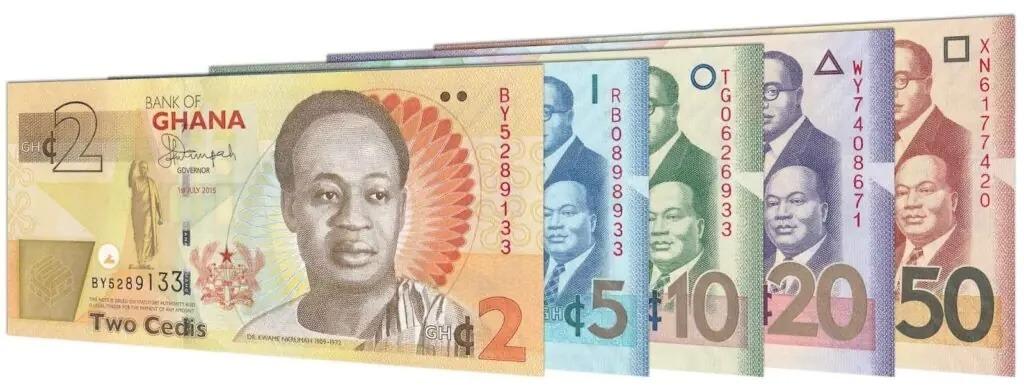
Ghanaian cedi banknotes and coins
Ghana’s currency is divided into cedis and pesewas, with 100 pesewas making one cedi.
Banknotes are issued in GH₵1, GH₵2, GH₵5, GH₵10, GH₵20, GH₵50, GH₵100 and GH₵200 denominations. Coins are issued in 1, 5, 10, 20 and 50 pesewas, as well as GH₵1 and GH₵2.
For everyday spending, smaller notes and coins can be useful in markets, taxis and independent shops where change for a high-value note may be limited.
Larger denominations are convenient for carrying higher amounts, but smaller businesses may not always have enough change for a GH₵100 or GH₵200 note.

Ghanaian cedi exchange and exchange rates today
If you’re preparing for a trip to Ghana, you’ll want to check the latest Ghana currency rate before you travel.
Exchange rates can fluctuate daily, influenced by trade, demand, and market data.
Ghana’s high inflation and economic shifts mean its currency can be volatile, but that also opens opportunities for savvy travellers to save money by timing their currency exchange wisely.
You can convert Ghanaian currency online using a reliable currency converter like us here at Manor FX.
It’s always smart to compare rate updates and fees before completing a transfer, but we offer the best rates and don’t charge any fees!
Coin denominations and security features
Modern Ghanaian coins and cedi notes feature advanced security measures, including holograms, watermarks, and microprinting.
These details make every issued note harder to counterfeit while maintaining convenience for users.
In total, millions of cedis and pesewa coins are in circulation across the country, representing the means by which Ghanaians pay for goods and services each day.
If you’re ever unsure of a note’s authenticity, check for texture differences or hold it to the light – Ghana’s vibrant banknotes are designed to be both secure and beautiful.
Dr Kwame Nkrumah, the Big Six and Ghana’s currency
The Ghanaian cedi is closely tied to Dr Kwame Nkrumah, whose introduction of a national currency reflected the birth of a new form of independence.
Each issued banknote still represents his vision for progress and equality.
The Bank of Ghana honours this legacy through the portraits and symbols printed on its notes and coins, celebrating Ghana’s identity and its enduring value on the global stage.
Buy Ghanaian currency now
What Ghana’s currency reveals about the country
The name “cedi” comes from an Akan word for cowrie shell. Cowrie shells were once used in trade in Ghana and other parts of West Africa, giving the modern currency a direct connection to an earlier form of money.
Ghana introduced its first cedi in 1965, replacing the Ghanaian pound after independence. In 2007, the currency was redenominated to make everyday figures easier to manage: 10,000 old cedis became one current Ghana cedi.
Ghana’s banknotes also reflect the country’s political history. Several denominations feature the Big Six, the group of independence leaders commemorated on Ghanaian currency. GH₵100 and GH₵200 notes and a GH₵2 coin were added in 2019 to make higher-value cash transactions more convenient.
From cowrie shells to cedis: the evolution of money
Long before paper notes, Ghana’s ancestors traded using cowrie shells – tiny white treasures from the ocean.
This tradition inspired the modern cedi’s name and connection to heritage.
As trade and exchange grew, the country adopted coinage and later banknotes to replace these early means of payment.
Over the decades, Ghana’s currency has undergone several changes, with old versions being demonetised when new series took their place.
Today, the cedi is a proud reminder of how Ghana’s financial system evolved from shells to sophisticated currency exchange standards recognised around the world.
The evolution and redenomination of Ghana’s currency
Before independence, the Gold Coast used the British West African pound. Following independence, the Bank of Ghana introduced the Ghana pound in 1958.
The country then introduced its first cedi in 1965, replacing the Ghana pound and giving the independent nation a new currency of its own.
Ghana’s currency changed again over the following decades. In July 2007, the Bank of Ghana redenominated it by removing four zeros: 10,000 old cedis became one Ghana cedi (GH₵1).
The conversion made prices, accounting and everyday cash transactions easier to express; it did not alter the value people held at the point of conversion.

How to get your Ghana currency with Manor FX
Ordering your Ghana cedi currency from Manor FX is quick, safe, and straightforward.
Whether you’re heading off soon or planning ahead, we make it simple to get your cash at the best Ghana currency exchange rate.
1. Start your order
Choose Ghanaian Cedi (GHS) and enter the currency amount you’d like.
You can also add other destinations to your basket if you’re visiting multiple countries.
2. Select delivery or collection
Choose home delivery, which is fully insured and tracked, or click and collect in-store near Heathrow.
3. Check your live rate
We’ll show you a real-time exchange rate and a transparent summary of any fees.
4. Add your details
Fill in your name, address, and contact information.
5. Pay and confirm
Complete your payment securely by bank transfer, by card or select to pay cash on collection.
You’ll receive an instant confirmation email with delivery details and tracking details.
6. Receive your cash
Your Ghanaian currency notes will arrive promptly, ready for your trip to Ghana.
It’s an easy and reliable way to access foreign currency without losing to airport markups.
Top tip: If you have leftover travel money, we can help! Exchange Ghanaian currency to GBP with Manor FX.
Takeaways
The Ghanaian cedi is more than just the currency of Ghana Africa – it’s a symbol of pride, history, and progress.
From its origins in the cowrie shell to its current cedi notes and pesewa coins, the cedi reflects Ghana’s unique journey from the Gold Coast to a modern economy.
As you prepare for your adventure, order your Ghana currency online with Manor FX for transparent rates, trusted service, and a truly secure experience.
You’ll save money, avoid last-minute fees, and be ready to explore one of West Africa’s most welcoming nations with cash in hand and confidence in your pocket.
FAQs
Cards are accepted at many hotels, supermarkets, shopping centres and larger restaurants in Ghana’s main cities, but they are not accepted everywhere. Carry Ghanaian cedi cash for markets, taxis, smaller businesses and places where card terminals or internet connections are unavailable. Tell your bank before travelling, protect your PIN and check your account for unfamiliar or duplicated transactions.
ATMs are available in cities and larger towns, but access can be less reliable elsewhere. Prefer an ATM inside a bank or in a well-lit, secure location, inspect the machine before use and shield your PIN. Check the displayed withdrawal fee and your own bank’s charges before confirming a transaction.The evolution and redenomination of Ghana’s currency
Yes. A mixture of lower-value cedi notes and coins is useful for taxis, markets, tips and small purchases where change for a large note may not be available. Keep larger amounts secure and separate from the cash you need for the day.
Do not rely on foreign currency for everyday purchases. The Ghanaian cedi is Ghana’s legal tender, and the Bank of Ghana prohibits businesses from pricing or accepting payment for goods and services in foreign currency unless authorised. Exchange money through an authorised provider and use cedis for normal local spending.
You can keep a small amount for a future trip or check whether Manor FX can buy back your current cedi banknotes through its sell-currency service. Confirm which denominations and note conditions are accepted before sending or visiting with the currency.