
Norway currency: the no-faff guide to money in Norway
If you’re visiting Norway, this guide makes Norwegian currency feel less like homework and more like a quick cheat sheet.
Sort your travel money, dodge awkward “do you take cash?” moments, and get on with the important stuff like charming cities, fjord views, and the northern lights.
Norway currency
The official currency of Norway is the Norwegian krone, which is Norway’s national currency and the everyday currency of Norway for shopping, transport, hotels, and basically everything else.
You’ll see prices in kr and NOK across Norway, from Oslo to small towns. (NOK is also the currency code.)
The word krone means “crown”, though in Norway it’s just written as krone or kroner.
Norwegian krone
The Norwegian krone is what Norwegians use day to day.
In Norwegian, “krone” is singular, and the plural kroner is used for amounts, so your receipt might say “kroner” even when you’ve only bought one slightly expensive cinnamon bun.
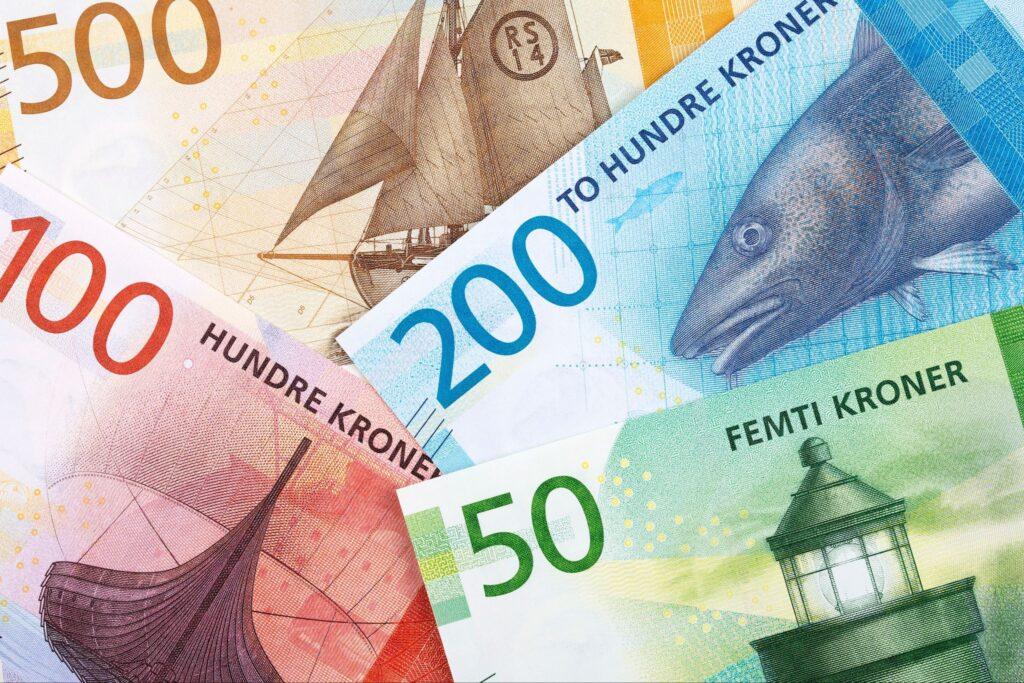
Norwegian krone currency
What you’ll actually hold and spend in Norway:
- Coins: common coins include 1, 5, 10 and 20 krone.
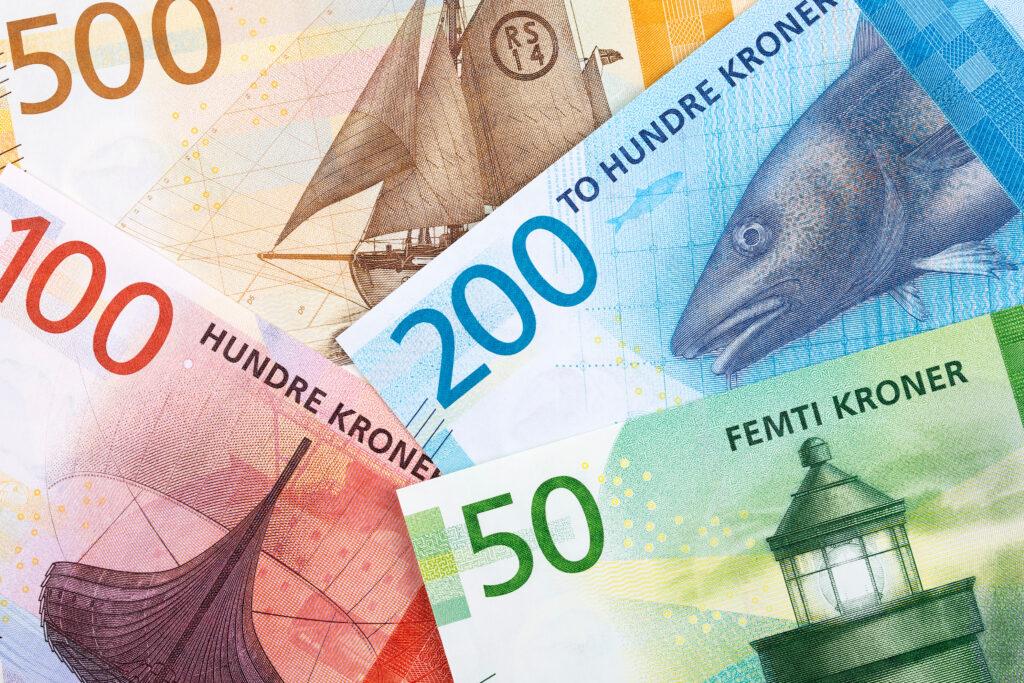
- Banknotes: common banknotes include 50, 100, 200, 500 and 1,000 krone.
- The krone is divided into 100 øre, although øre is not commonly used in cash day to day transactions.
If you’re looking for Norway currency notes, that usually means those krone banknotes above, plus the coins you’ll end up collecting in your pocket like souvenirs.
Norwegian krone (NOK)
The krone is abbreviated as NOK on exchange boards and banking apps, and you’ll usually see prices marked with kr in shops and restaurants.
What is an exchange rate?
An exchange rate is just the value of one currency compared to another. Your real cost comes down to three things:
- The headline exchange rate
- The provider’s spread (their margin on the rate)
- Any fees or card transaction charges
That’s why “the best rate” is not always the one that looks best at a glance.
If you’re comparing a conversion rate for travel, always check the final total you’ll pay and what you’ll actually receive.
Why do NOK exchange rates fluctuate
The NOK exchange rate changes frequently, so don’t lock your budget to a single number. If you want the most useful comparison:
- Start with a mid-market reference using a currency converter
- Then compare providers’ online rates and total cost – including any fees (P.S. You can save time and effort when you know that our rates are the best and we don’t charge any fees!)
If you’re specifically checking the GBP to NOK exchange rate, remember the exact Norwegian currency exchange rate will differ slightly depending on whether you’re exchanging cash, paying by card, or using a travel product.
Travel money
Using a card in Norway is easy. Norway is very contactless-friendly. Most places accept tap-to-pay card payments, and mobile wallets (Apple Pay or Google Pay) work widely too.
A simple, realistic plan:
- Bring some cash in Norwegian krone for small buys, backups, and the occasional rural stop.
- Use a debit card or credit card for the rest of your spending.
- If you use a travel money card, treat it like your main card and keep a backup card separate.
Mastercard is widely accepted, and contactless via phone payments are common in cities, too.
Just watch out for FX charges from your card provider.
Is the Euro accepted in Norway?
Short answer: not usually.
The euro isn’t widely accepted for everyday payments in Norway, so don’t rely on it.
You might see a tourist-focused place accept euros, but it’s not the norm, and the rate is rarely friendly. Your safest bet is paying in Norwegian krone.

What is the best currency to take to Norway?
The best currency for Norway is the Norwegian krone currency itself.
Taking krone means you can pay easily, avoid poor on-the-spot conversions, and keep your spending clear.
Can I use GBP in Norway?
In general, no. GBP is not a standard payment currency in Norway. If somewhere accepts it, the rate will usually be poor. For day to day spending, stick to the Norwegian krone.
If you’re looking for Norway currency to pound comparisons, that’s for budgeting and exchange, not for paying in shops.
How much is one pound in Norwegian money?
The pound to Norway currency rate changes daily, so the best answer is: check a currency converter for the live Norwegian currency to sterling rate before you buy.
If you’re searching for Norwegian currency to GBP, Norwegian currency to pounds, or norway currency to GBP, use a converter first, then compare travel money providers’ totals to see what you’ll actually receive.

Buy your krone now
Buy Norwegian krone
If you like arriving organised, you can buy Norwegian krone before you travel. It’s a simple move that makes landing day easier.
What to look for when you buy Norwegian kroner from a provider like Manor FX:
- A clear Norwegian currency rate
- Any fees are shown upfront. (We don’t charge any!)
- Delivery options that fit your trip timing
If you’re travelling beyond Oslo into rural areas, having some krone cash ready can be especially handy.
Home delivery
If you don’t live near a bureau, home delivery makes life easy. With Manor FX, you can order online, get great rates and enjoy your travel cash delivered securely.
Key bits from Manor FX:
- Delivery costs £7.50 for orders under £750
- Free home delivery for orders of £750 or more
- Orders are sent by Royal Mail Special Delivery Guaranteed by 1 pm
That’s a straightforward way to get travel money sorted without adding an extra errand to your week.

How to get your Norway currency with Manor FX
No long checklist, no faff. Here’s the smoother version:
- Choose your currency
Select Norwegian krone, enter how much you want in GBP, then check the Norwegian krone exchange rate and the total.
- Pick delivery or collection
Choose home delivery if you want it to come to your door, or collect if that suits you better.
- Lock it in and confirm
Review your order, check any delivery cost, then place the order, and you’re done.
If you’re hunting for great Norwegian krone rates, the main trick is comparing like for like. Look at the all-in cost and what you’ll receive, not just a headline number.
Norway’s currency history
Tiny history bite, because it’s actually interesting:
- The krone was introduced in 1875 when Norway joined the Scandinavian Monetary Union with Sweden and Denmark.
- It was linked to a gold standard system at the time.
- Norway has had its own krone through major periods in European history, including the German occupation.
If you’re a geography nerd, yes, the krone applies across Norway’s territory, including places like Jan Mayen.
Tipping in Norway
Tipping is not a big deal in Norway. Many places pay staff properly, and service is often included in the price.
A simple approach for Norwegian standards:
- Restaurants: round up a little if service was great
- Bars: optional
- Taxis: rounding is common
Do what feels fair. No pressure to tip on every bill.
Latest government travel advice
Before your trip, check the latest government travel advice for entry rules and safety updates, especially if your plans include winter travel and chasing the northern lights near the Arctic Circle.

FAQs
Is the Norwegian krone pegged to any other currency?
No. The Norwegian krone is not pegged to another currency. Norway runs a floating exchange rate regime, with Norges Bank targeting inflation rather than fixing the krone to the euro or any other currency.
What Norwegian kroner denominations are in circulation?
In Norway, the banknotes in circulation are 50, 100, 200, 500 and 1,000 kroner.
The coins in circulation are 1, 5, 10 and 20 kroner (plus some commemorative coins, which are also legal tender).