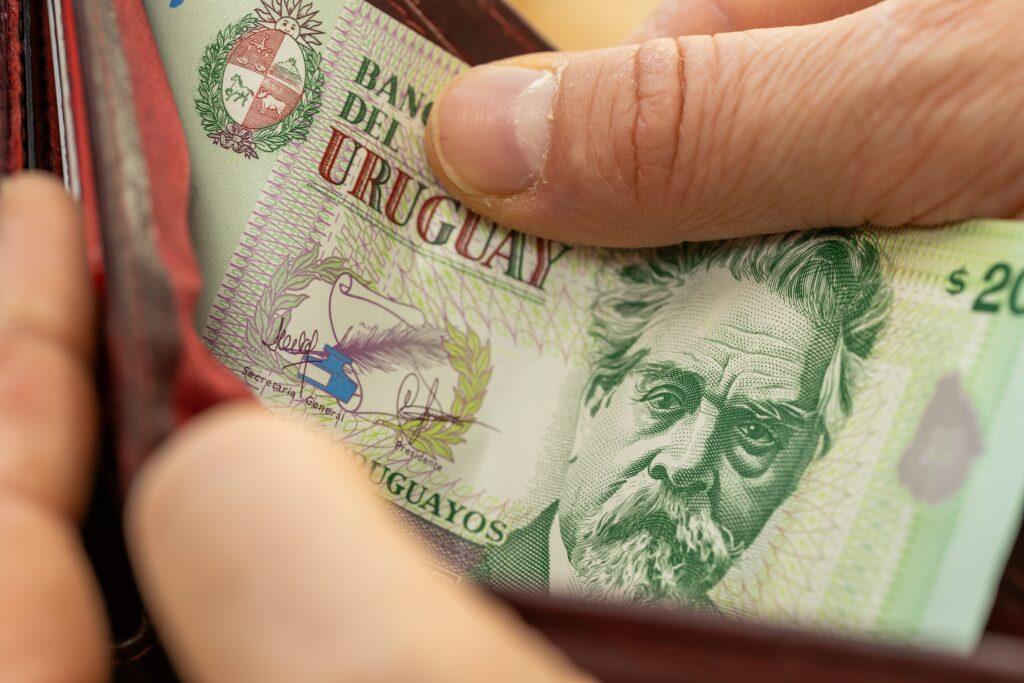

The fascinating history of Uruguay currency
The currency of Uruguay is the Uruguayan peso, known locally as the peso uruguayo.
Its currency code is UYU, and it is used across Uruguay for everyday payments, from cafés in Montevideo to beach bars in Punta del Este.
But the Uruguayan currency is more than a practical travel detail. Its coins, banknotes and currency reforms tell a story about the country’s history, culture, wildlife and economy.
So whether you’re planning a trip, checking the Uruguay currency exchange rate, or just curious about the money used in this part of South America, here’s your friendly guide.
Quick facts: Uruguay currency (UYU)
| Official currency | Uruguayan peso |
| Local name | Peso uruguayo |
| Currency code | UYU |
| Currency symbol | Usually $ or $U |
| Common banknotes | 20, 50, 100, 200, 500, 1,000 and 2,000 pesos |
| Common coins | 1, 2, 5, and 10 pesos |
| Legal tender | Uruguay only |
| Useful for | Cash payments, tips, taxis, markets, cafés and smaller costs |
| Simple tip | Take some local currency before you travel, then use cards where they are widely accepted |
What currency does Uruguay use?
The Uruguayan peso is the present currency and official legal tender of Uruguay.
It is issued by the Central Bank of Uruguay, which publishes details about the country’s banknotes and coins in circulation.
You may see the currency written as UYU, $U, peso, pesos, Uruguayan pesos, UYU or peso uruguayo.
The symbol can look similar to other peso currencies, so context matters.
A Uruguayan peso is not the same as an Argentine peso, Mexican peso or Colombian peso. The difference is clear.
If you are comparing prices, exchange rates or travel money, make sure you are looking at the right currency code. Uruguay’s currency code is UYU.
Currency in Uruguay: cash, cards and everyday spending
The currency used in Uruguay is the Uruguayan peso, and it is the best currency for everyday spending.
Cards are common in cities and tourist areas, especially in Montevideo and Punta del Este. Many hotels, restaurants, stores and larger businesses accept Visa and Mastercard.
However, cash is still useful for taxis, tips, markets, small cafés, buses, rural areas and smaller purchases.
If you are visiting Uruguay, the safest plan is usually a mix: take some local currency in cash, then use a debit or credit card where card payments are widely accepted.
Exchange rates: British pounds to UYU
If you are travelling from the UK, you will probably be checking British pounds to Uruguay currency, GBP to Uruguay currency, GBP to UYU rates.
The Uruguayan peso exchange rate can move from day to day. The rate you get depends on the currency pair, demand and supply, the wider currency markets, interest rates, market rates, and the margin used by the currency exchange provider.
That is why the exchange rate today matters more than an old example from an article.
A live currency converter or currency calculator can help you check how many pesos your pounds are worth before you buy.

UYU exchange rates and UYU charts
A UYU chart can help you see how the peso has moved against another currency over time.
For UK travellers, the most useful currency pair is usually GBP to UYU. For people comparing with dollars, it may be USD to UYU.
Some tools show historical data over 30 days or 90 days, which can be useful if you want to see whether the pound has strengthened or weakened.
Just remember that historical data does not guarantee what happens next.
When comparing UYU exchange rates, make sure you are comparing the actual rate you will receive, not just the mid-market rate shown for reference.
Hidden fees and travel money
A good UYU exchange is not only about the headline rate. The final value matters.
Some providers show a tempting rate but add delivery charges, card fees, service charges or wide margins.
Others build costs into the exchange rate, which can make hidden fees harder to spot.
Before you buy Uruguay currency, compare:
- the exchange rate
- delivery or collection options
- any fees or charges
- the final amount of pesos you will receive
- the buy-back rate if you expect to return with leftover cash
This helps you save money and avoid paying more than you need to.
The history of peso uruguayo
The history of the peso uruguayo predates the modern Uruguayan peso.
During the colonial period, Spanish coins such as reales and escudos circulated in the region.
After Uruguay became independent in the 19th century, the country gradually developed its own monetary system.
The peso became central to Uruguay’s money story in the 1800s.
Later, inflation and economic change led to several currency reforms.
The modern peso uruguayo was adopted in 1993, replacing the previous nuevo peso at a rate of 1,000 to 1.
Uruguay’s National Statistics Institute explains that the 1993 change removed three zeros from the former currency.
Uruguay banknotes: colourful, clever and cultural
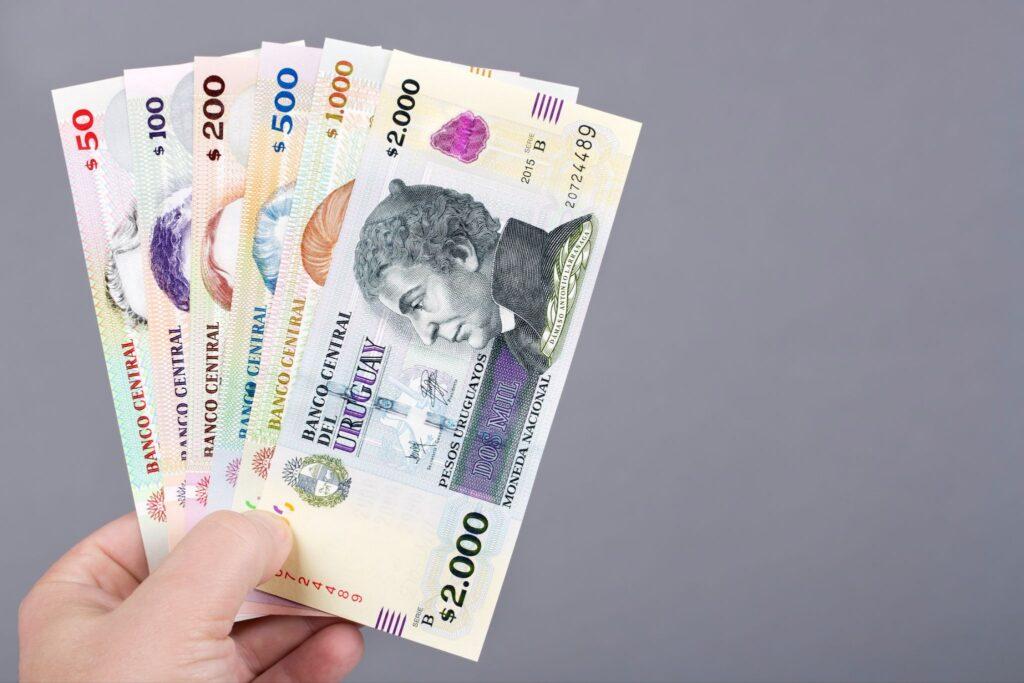
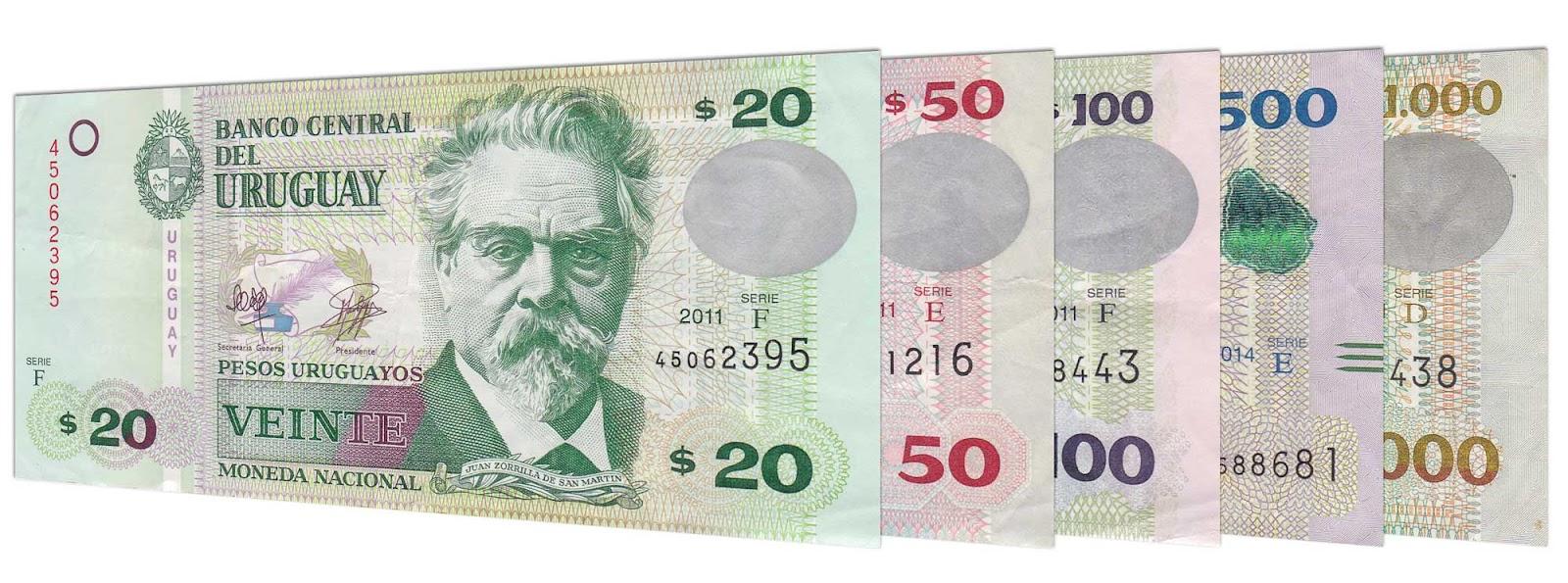
Uruguay’s banknotes are more than everyday cash. They celebrate writers, artists, musicians, educators and national figures who helped shape the country.
Current banknotes commonly include:
- 20 pesos
- 50 pesos
- 100 pesos
- 200 pesos
- 500 pesos
- 1,000 pesos
- 2,000 pesos
The designs include cultural figures such as Juan Zorrilla de San Martín, José Pedro Varela, Eduardo Fabini, Pedro Figari and Juana de Ibarbourou.
Modern notes also include security features to help protect against counterfeiting.
The Central Bank of Uruguay provides information on banknotes, coins, symbolism, history and security elements.
Uruguay coins and the wildlife in your pocket
Uruguay’s coins are small, practical and full of character. Common coins include:
- 1 peso
- 2 pesos
- 5 pesos
- 10 pesos
Modern Uruguayan coins feature native wildlife, including animals such as the armadillo, capybara, ñandú and puma.
It is a lovely detail that turns everyday change into a tiny celebration of the country’s natural world.
Coins are handy for local transport, tips, markets, small purchases and rounding up a bill in cafés or restaurants.

The US dollar, euro and other currencies in Uruguay
The local currency is the Uruguayan peso, but some tourist-facing businesses may accept the US dollar, especially for larger travel costs or hotel payments.
That does not mean dollars are always the best option. If you pay in USD, you may not get the best value, and your change may be given in pesos.
Euros are less common for everyday payments, although you may be able to exchange them at a bank or bureau.
For normal spending, the peso is the simplest and most widely accepted choice.
Cash, cards and payment in South America
Uruguay is one of the more tourist-friendly countries in South America, and card payments are common in cities.
But cash still has its place.
If your card fails, your bank blocks a payment, or an ATM is out of service, pesos are very useful.
Cash also helps with smaller businesses, markets, taxis, tips and places outside the busiest tourist areas.
The best travel money plan is not cash or card. It is cash and card, used sensibly.
Punta del Este, Montevideo and everyday prices
Prices in Uruguay can vary depending on where and when you travel.
Montevideo, the capital city, has a mix of restaurants, museums, cafés, markets and shops.
Punta del Este is one of Uruguay’s most famous beach resorts and can be more expensive, especially in peak season.
December to March is Uruguay’s summer period, with January often busy in coastal towns.
If you visit during this period, demand for accommodation, restaurants and beach services can push prices up.
Whatever your budget, having some pesos makes everyday spending easier. Think coffee, taxis, snacks, local buses, museums, tips and smaller restaurants.

Fun facts about Uruguayan pesos
Uruguay’s currency has more personality than you might expect.
- The word peso comes from the Spanish word for “weight”, which is why several countries with Spanish colonial history use peso currencies today.
- Uruguay’s modern coins celebrate local wildlife, so you may find an armadillo, capybara, or puma in your change.
- The banknotes focus strongly on culture, education and the arts, giving the money a literary and creative feel.
- And while the symbols can seem confusing at first, $, $U, UYU and peso uruguayo all point to the same thing: Uruguay’s local currency.
Where to buy Uruguayan pesos in the UK
| Option | What to expect |
| Specialist bureau (online) | The simplest option for less common currencies: compare rates and order ahead. Get the best rates and swift home delivery with Manor FX. |
| High street banks | Some currencies may need ordering in advance; availability can vary by branch. |
| Post Office | Stocks a range of travel money, but less common currencies may be limited or unavailable. |
| Airport exchange | Convenient, but higher costs; stock of rarer currencies can be unpredictable. |
Get Uruguayan currency with Manor FX
Need Uruguayan pesos before you visit Uruguay? Manor FX can help you order your travel money before you fly.
You can buy Uruguayan peso online, compare the current rate and choose secure delivery or collect from our bureau in Datchet – often the same day.
Having pesos ready before your trip means less time spent worrying about currency exchange when you arrive and more time to enjoy Uruguay.
Buy your pesos now
Is Uruguay currency useful after your trip?
The Uruguayan peso is used in Uruguay, so you are unlikely to spend it in another country after your trip.
If you return with leftover pesos, you can exchange them back to British pounds.
Check the Uruguayan currency to British pound exchange rate before selling.
The buy-back rate will usually be different from the rate you paid when buying travel money.
If you plan to return to Uruguay soon, you may want to keep a small amount.
Otherwise, exchanging it back stops your holiday money sitting forgotten in a drawer.

FAQs
The best currency to use in Uruguay is the Uruguayan peso.
It is the official currency and the most practical option for everyday spending.
Some tourist businesses may accept US dollars, but pesos are better for taxis, cafés, restaurants, small shops and local costs.
Uruguay uses the Uruguayan peso, not the dollar or euro.
The US dollar may be accepted by some tourist businesses or used for certain larger prices, but it is not the everyday local currency.
Euros are not normally used for day-to-day payment.
The answer depends on the live exchange rate. As a recent example, Wise showed 100 US dollars at about 3,972.50 Uruguayan pesos, based on a rate of around 39.73 UYU to 1 USD 14/05/2026.
This changes constantly, so check a live currency converter before exchanging money.
No, you should not expect to use Argentine pesos in Uruguay.
Uruguay has its own currency, the Uruguayan peso.
If you arrive with Argentine pesos, you may need to exchange them first, and the rate may not be favourable.
For everyday spending, take or buy Uruguayan pesos.