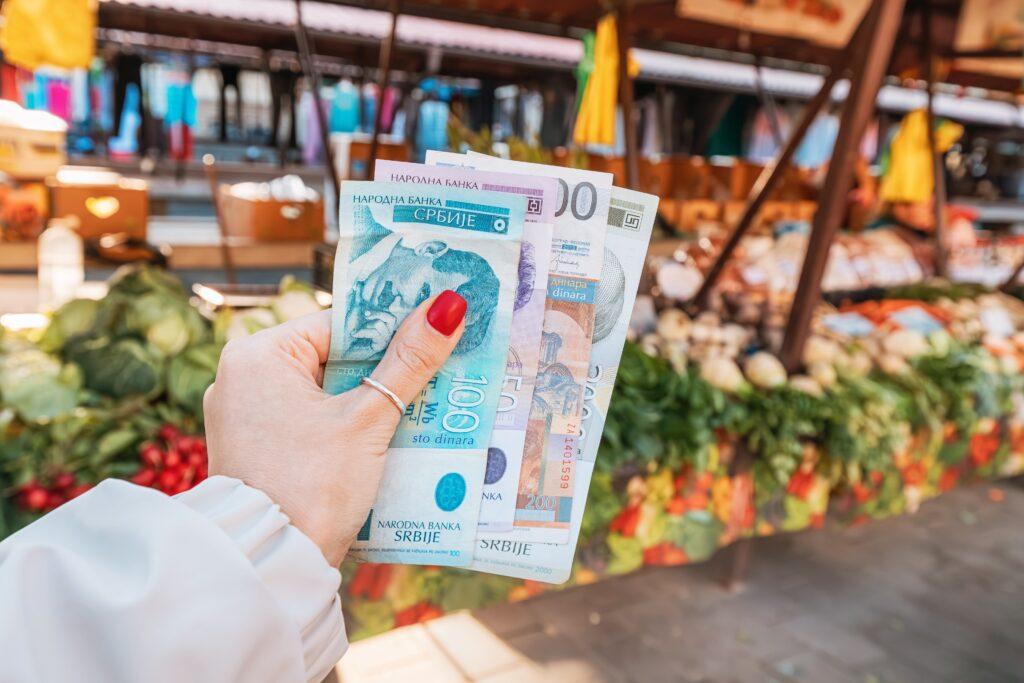

Serbia currency tips for a smooth trip
Serbia is brilliant for city breaks, food, and culture, but it pays to get your travel money sorted before you go.
The currency in Serbia is the Serbian dinar (RSD), and you’ll usually need dinars for everyday spending, especially outside major tourist areas.
This guide covers the essentials (notes, coins, cards vs cash, and practical tips for travellers).
Quick facts: Serbian dinar
| Code | RSD |
| Symbol | дин. (often shown as RSD) |
| Subunit | Para (100 para = 1 dinar) |
| Common banknotes | 10, 20, 50, 100, 200, 500, 1,000, 2,000, 5,000 |
| Common coins | 1, 2, 5, 10, 20 dinars |
| Where used | Serbia |
What is the currency in Serbia?
The currency in Serbia is the Serbian dinar. Its currency code is RSD, while prices may also show the Serbian currency symbol дин.
When you see prices in shops, restaurants, and markets, they will be displayed in dinars.
You might also hear locals just say “dinara” in everyday conversation.
Serbian dinars are used for everyday spending throughout Serbia.
A short history of the Serbian dinar currency
The Republic of Serbia currency has a rich history, dating back centuries.
Over time, it has been influenced by rulers, wars, and economic changes.
The current design includes figures like the king of Serbia’s past, celebrated philosopher Dositej Obradović, and the composer Stevan Stojanović Mokranjac. You will also spot the astronomer Milutin Milanković on some banknotes.
Historians note that each portrait reflects Serbia’s cultural pride, and even the kingdom era left its imprint on the new Serbian currency designs.
Serbian dinar banknotes and coins explained
The most common denominations of Serbian dinar banknotes are 10, 20, 50, 100, 200, 500, 1000, 2000, and 5000 dinars.
Serbian dinar coins are available in smaller values, such as 1, 2, 5, 10, and 20 dinars.
Each note features detailed artwork, and the coins display national symbols and iconic places. If you love design, Serbian money is a treat for the eyes.

Is the Serbian dinar a closed currency?
Yes, the Serbian dinar is a closed currency, which means you cannot easily buy it outside the country except through specialist providers like Manor FX.
It also means you should avoid taking large amounts out of Serbia without declaring them at customs.
Serbia currency to GBP: Converting pounds to dinars
When you look at RSD to GBP rates, you will see that the exchange can be very favourable for British travellers.
Whether you check the Serbian currency to GBP or Serbian currency to pound values, it is worth comparing providers.
Converting from the British pound at the right moment can give you more dinars in your pocket.

Serbian dinars and the exchange rate
Serbian dinars move with the market, so checking the exchange rate before you buy is smart.
The national bank publishes daily rates, but these are reference values rather than what you will get at a counter.
Buying Serbian currency before you travel
If you buy Serbian currency before you go, you will have cash ready for taxis, snacks, or tips the moment you land.
Serbian currency exchange options at airports often have higher fees, so using a foreign currency specialist like us in advance can save you money.
Where to buy Serbian dinars in the UK
| Option | What to expect |
| Specialist bureau (online) | The simplest option for less common currencies: compare rates and order ahead. Get the best rates and swift home delivery with Manor FX. |
| High street banks | Some currencies may need ordering in advance; availability can vary by branch. |
| Post Office | Stocks a range of travel money, but less common currencies may be limited or unavailable. |
| Airport exchange | Convenient, but higher costs; stock of rarer currencies can be unpredictable. |
Using cash, cards and ATMs in Serbia
Cards are accepted by many hotels, larger shops and restaurants, especially in cities. Keep some Serbian dinars for markets, taxis, smaller businesses and places outside the main tourist areas.
ATM fees vary by machine and card provider.
Review the fee shown before confirming a withdrawal. If the ATM offers to convert the withdrawal into pounds, choose to be charged in RSD so your own card provider applies its exchange rate.
How Serbian dinars are designed
Serbian dinar notes and coins feature cultural figures, buildings and national symbols.
Designs differ by denomination, and the National Bank of Serbia publishes examples of the notes and coins currently in circulation.

How to get your currency with Manor FX
Ordering your Serbian dinars from Manor FX is quick and secure.
You select the amount you need, confirm your details, and pay by card or bank transfer, or choose to pay on collection.
Depending on your plan, your currency can be delivered straight to your door or packed in a money-safe envelope. You can also click and collect.
This way, you start your trip prepared and stress-free.
Currency tips for trips to neighbouring countries
If you are exploring the Balkans, you will find that Montenegro uses the euro, and Hungary’s official currency is the Hungarian forint.
Knowing these differences saves you from scrambling for change at borders.
A little planning can help you glide between destinations without a hitch.
Wrapping up your Serbia travel prep
Now you know everything from the currency for Serbia to the currency of Serbia, and even a few fun facts about Serbia’s own banknotes and coins.
Whether you are there for the history, food, or nightlife, sorting your money before you go ensures you spend more time enjoying the journey and less time hunting for an ATM.

FAQs
No, Serbia does not use the euro. The official currency of Serbia is the Serbian dinar (RSD).
While some hotels and tourist spots may accept euros, you will usually need Serbian dinars for everyday payments.
Exchange your British pound or other foreign currency before travelling for the best exchange rate.
Serbian dinars are the most useful currency for everyday spending. Pounds and euros can be exchanged through authorised providers, but do not rely on shops, restaurants or transport providers accepting foreign currency.
The pound value of 100 Serbian dinars changes with the exchange rate. Check the live GBP to RSD rate before buying rather than relying on an old conversion example.
Serbia does not have a newly introduced currency. Its current currency is the Serbian dinar (RSD), issued by the National Bank of Serbia. Serbia has not adopted the euro.