
Sterling Vietnam dong exchange rate explained
The sterling Vietnam money exchange rate shows how many Vietnamese dong (VND) you get for one British pound (GBP).
For UK travellers, the important thing is not just the headline rate, but the full value you get once fees, margins and delivery costs are included.
This guide covers the essentials, including how GBP to VND works, what affects the rate, how to compare providers properly, and how to sort your Vietnam travel money before you go.
Quick facts: Sterling to Vietnamese dong
| Currency pair | British pound to Vietnamese dong |
| Codes | GBP to VND |
| Local currency | Vietnamese dong |
| Symbol | ₫ |
| What the rate shows | How many Vietnamese dong you get for £1 |
| What affects it | Market movements, provider margins, fees and delivery costs |
| Useful benchmark | The mid-market rate is a guide, not usually the customer rate |
| Simple tip | Compare the final amount of dong you receive, not just the headline exchange rate |
What does GBP to VND actually mean?
GBP to VND is just the shorthand for converting British pounds into Vietnamese dong, the official currency and local currency used in Vietnam.
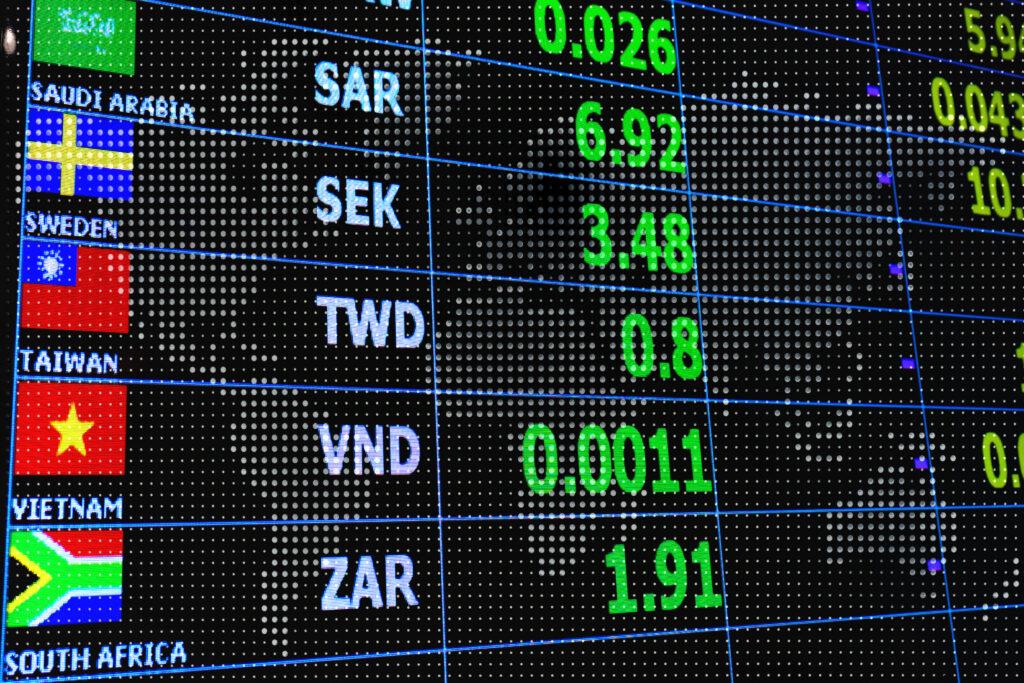
You may also see the currency code VND on a rate board, a currency converter, or a provider’s checkout page.
The currency symbol for the dong is ₫, although in practice, most people focus more on the number of dong they are getting than the symbol itself.
Why the Vietnam currency exchange rate matters more than you think
If you are buying holiday money, the rate affects almost everything.
It influences how much you can spend, how much value you get from your money, and whether everyday prices in Vietnam feel comfortably cheap or a bit more expensive than expected.
A better pound to Vietnam dong exchange rate does not just look good on a screen. It can mean more meals, more taxis and more room in the budget once you arrive.
Mid-market rate versus customer rate
This is where people often get caught out. The mid-market rate is the midpoint between wholesale buy and sell prices.
Whilst it is a useful benchmark, it’s not usually the rate ordinary customers get when buying cash.
A provider may advertise attractive online rates, but once fees, margins and handling charges are included, the actual Vietnamese dong exchange rate you receive can look quite different.
Using a currency converter without fooling yourself
A currency converter is helpful, but only if you use it for the right job.
It can give you a rough idea of how much Vietnamese dong you might get for your British pounds, and help you follow rate movements over time.
But a converter is still only a guide; it cannot tell you what a provider will actually charge once all costs are factored in.
What moves the exchange rate of the Vietnam currency?
The Vietnam exchange rate moves for the same broad reasons as most exchange rates: economic news, interest-rate expectations, broader market fluctuations, and demand for major currencies such as GBP and the dollar.
ex
None of that means you need to stare at graphs all day.
It just means rates are not fixed, and the VND exchange rate today may not be the same tomorrow.
To keep things simple, check the rate a few times, compare providers and buy when the overall deal looks fair.

How to compare different providers properly
For a sensible pound Vietnam dong exchange outcome, compare more than the headline number.
Look at:
- The amount of Vietnamese dong you receive
- The total costs
- Any extra fees (p.s. Manor FX doesn’t charge any fees)
- Collection or home delivery options
- And whether the provider is clear about what you are paying
That is how you properly compare other providers.
The best option is not always the one shouting loudest about the “best exchange rate for Vietnamese dong”.
The best option is the one that gives you the best overall result after the small print.
Exchange rates are not the whole story when you convert currencies
A good-looking rate can still hide a poor deal. That is why exchange rates alone are not enough.
A provider can offer a tempting GBP to VND exchange headline and still reduce the overall value with handling charges or awkward delivery terms.
When you exchange GBP, what matters is the full picture, not just the biggest number on the page.
This is also where hidden fees become such a nuisance. They distort what should be a simple comparison.

Travel money versus money transfers
This is worth clearing up because people mix these up all the time.
Travel money is for spending while you are away.
Money transfers, international money transfers, sending money, and transfer services are for moving funds between people, accounts or banks.
If you’re looking for cash in your hand for Vietnam, you are not looking for a provider focused on sending money abroad or investment services under electronic money regulations. You are looking for travel cash.
They are different products, with different providers, different fees and different uses.
Should you buy Vietnamese dong before you travel?
Usually, yes, at least in part. Buying some cash before you fly can make the first day much easier.
You are not left searching for an ATM, trying to work out unfamiliar payment systems, or making rushed decisions at an airport desk.
If you buy Vietnamese dong in advance, you can arrive with enough money for transport, food, and early expenses, and then decide later whether to use debit cards or make more withdrawals.
We also offer a great Vietnam dong to GBP exchange rate if you happen to get back to the UK with leftover travel money in your wallet, so no worries there!

Is it better to buy dong in Vietnam?
Not always. Some travellers assume it is automatically better to exchange money after arrival, but that depends on the rate available, where you are changing it, and how much time or energy you have after a long flight.
Sometimes changing cash on arrival means queueing, guessing whether a desk is competitive, or accepting a poor rate because you need money straight away.
Buying at least some Vietnamese dong online before you travel can remove that pressure and make the first day smoother.
Cards, cash and spending in Vietnam
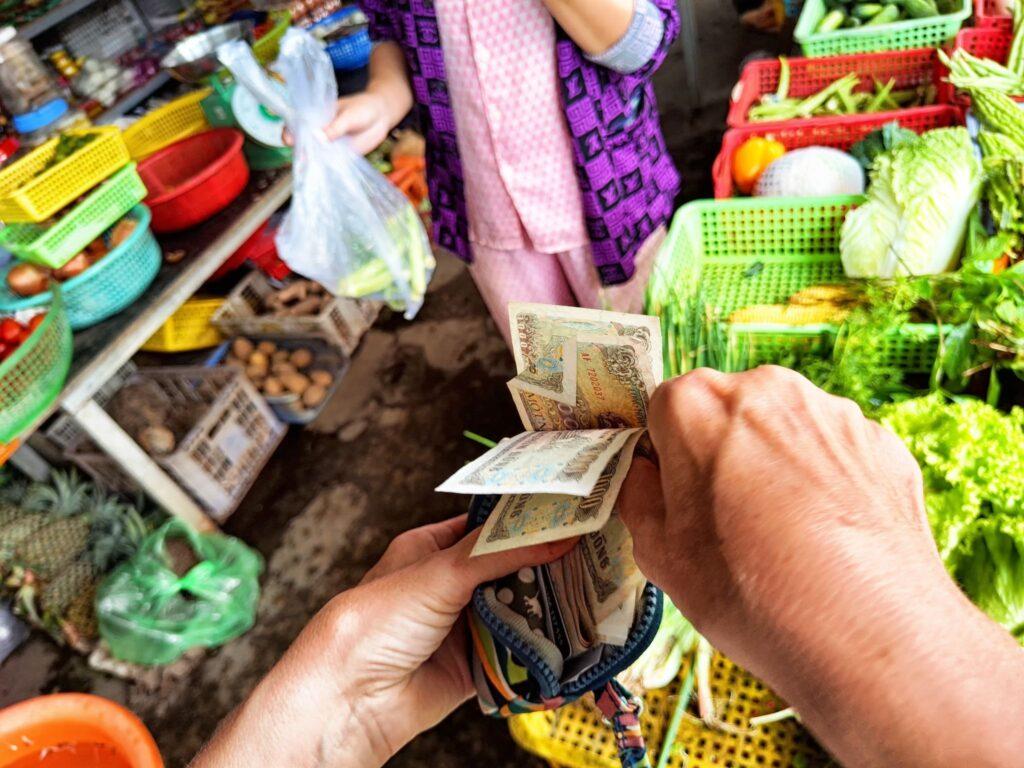
For day-to-day spending, Vietnam still leans heavily towards cash, even though card payments are common in more polished settings.
A card in Vietnam can be useful in larger hotels, some chain restaurants, and parts of major cities, but cash is still important for many everyday travel situations.
An international debit or credit card can be helpful as a backup, but you should not assume every purchase can be handled that way.
If you spend abroad often, you probably already know this dance.

A quick note on Vietnamese dong banknotes and coins
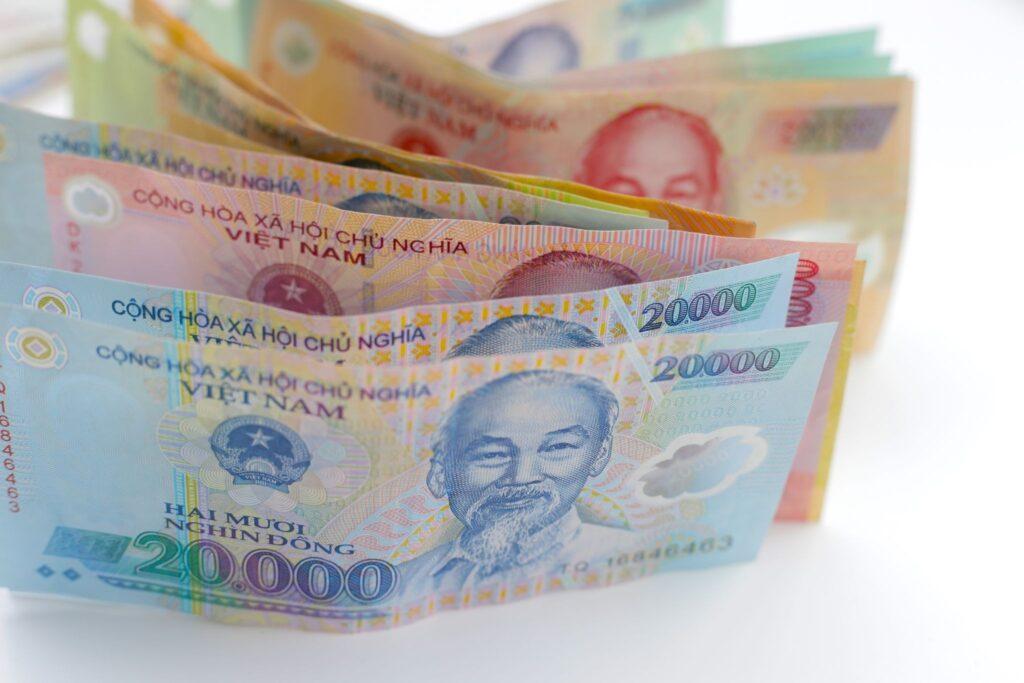
Vietnam is mostly a banknote economy, so you are far more likely to handle Vietnamese dong banknotes than coins.
The notes can take a little getting used to at first because the numbers are high, and several notes may feel similar when you are tired or moving quickly.
That is another good reason to arrive with some cash already sorted.
It gives you time to get comfortable with the notes instead of trying to figure everything out on the hoof.
Where to buy Vietnamese dong in the UK
| Option | What to expect |
| Specialist bureau (online) | The simplest option for less common currencies: compare rates and order ahead. Get the best rates and swift home delivery with Manor FX. |
| High street banks | Some currencies may need ordering in advance; availability can vary by branch. |
| Post Office | Stocks a range of travel money, but less common currencies may be limited or unavailable. |
| Airport exchange | Convenient, but higher costs; stock of rarer currencies can be unpredictable. |
Buy your dong now
How to get your Vietnam travel money with Manor FX
Convert British pounds to VND
Want to order online? Manor FX keeps it straightforward.
You choose how much Vietnamese dong you want, check the full rate and costs, and then decide whether you want home delivery or to collect.
Plan ahead, compare the total cost of the deal, and avoid unnecessary airport scrambling.
It can also help you save money if you prefer to sort everything before you go rather than make rushed choices on the day.
Another plus is flexibility. You can order travel money online, check estimated delivery times, and convert other currencies at the same time if Vietnam is only one stop on a wider trip.
That can save admin time, simplify the process, and make your budget easier to manage from the UK.
Don’t forget we’ve got great VND to GBP exchange rates if you have leftover holiday money to convert, too.
A simple rule for getting the most competitive exchange rates
Do not obsess over every tiny movement in the GBP exchange rate.
Instead:
- Check the VND exchange rate
- Compare a few providers
- Look at the final amount of dong you will receive for your GBP converted.
- Factor in all fees and delivery costs
- Then choose the option that gives you the best real-world result
That is usually a smarter move than chasing a flashy headline or trying to outguess the market.

FAQs
Usually not. Unless you are buying a large amount, most travellers do not need to track exchange rates for 30 days or 90 days.
A few well-timed checks are often enough to get a decent deal when you convert currencies.
The best way to exchange money in Vietnam depends on convenience, timing and the full deal you are offered.
For many travellers, the safest and least stressful option is to arrange at least some travel money before departure and avoid relying completely on airport counters or last-minute exchanges.
Sometimes, but for normal spending, the local currency is still the one that matters most. Carrying some other currencies can be useful as backup, but everyday transactions are much easier when you have Vietnamese dong.