
Vietnam currency: a practical guide for travellers
The currency in Vietnam is the Vietnamese dong (VND), abbreviated as ₫.
For UK travellers, the key thing to know is that Vietnam still relies heavily on cash for many everyday purchases, even though card payments are accepted in plenty of hotels, restaurants and larger businesses.
This guide covers the essentials, including the currency code, notes and coins, cash versus card use, and how to sort your Vietnam travel money before you go.
Quick facts: Vietnamese dong (VND)
| Code | VND |
| Symbol | ₫ |
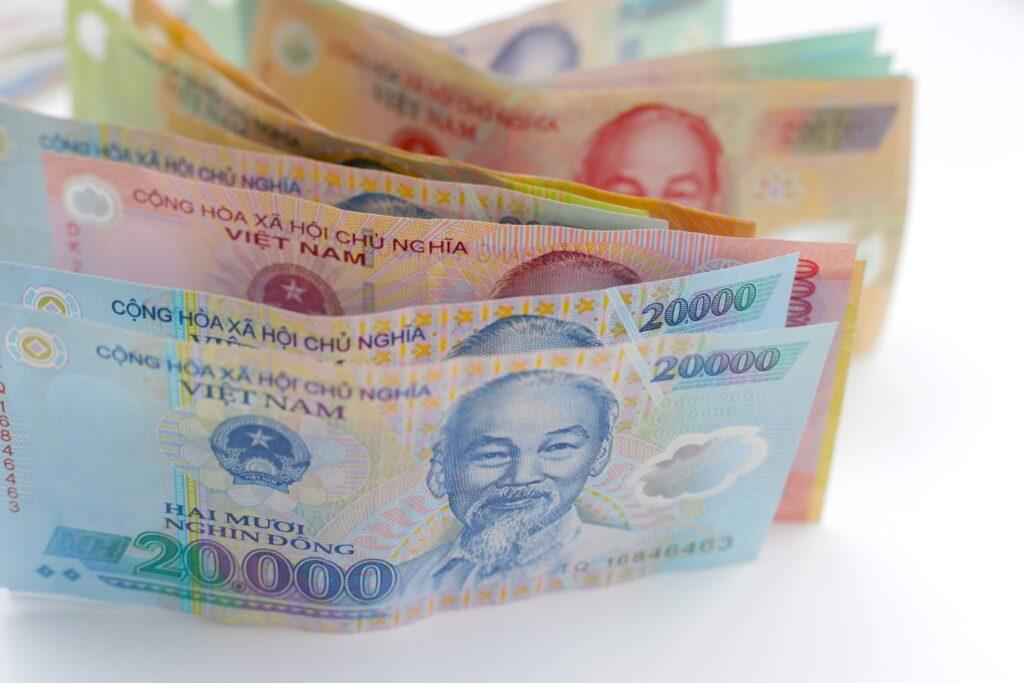
| Common banknotes | 10,000, 20,000, 50,000, 100,000, 200,000 and 500,000 VND are commonly used, with smaller notes also in circulation |
| Common coins | Coins exist, but they are not commonly used in everyday spending |
| Where used | Vietnam |
| Cash vs card | Cash is still important for many day-to-day purchases, while cards are accepted in many hotels, restaurants and larger businesses |
| Simple tip | Carry smaller dong notes for taxis, markets and casual food stops, and do not assume every place will take cards. |
What is the official currency of Vietnam?
The official currency is the Vietnamese dong, often written as Vietnamese dong VND.
The currency code VND and the currency symbol ₫ are what you will usually see on exchange boards, banking apps and price lists.
Vietnamese dong banknotes, coins and everyday prices
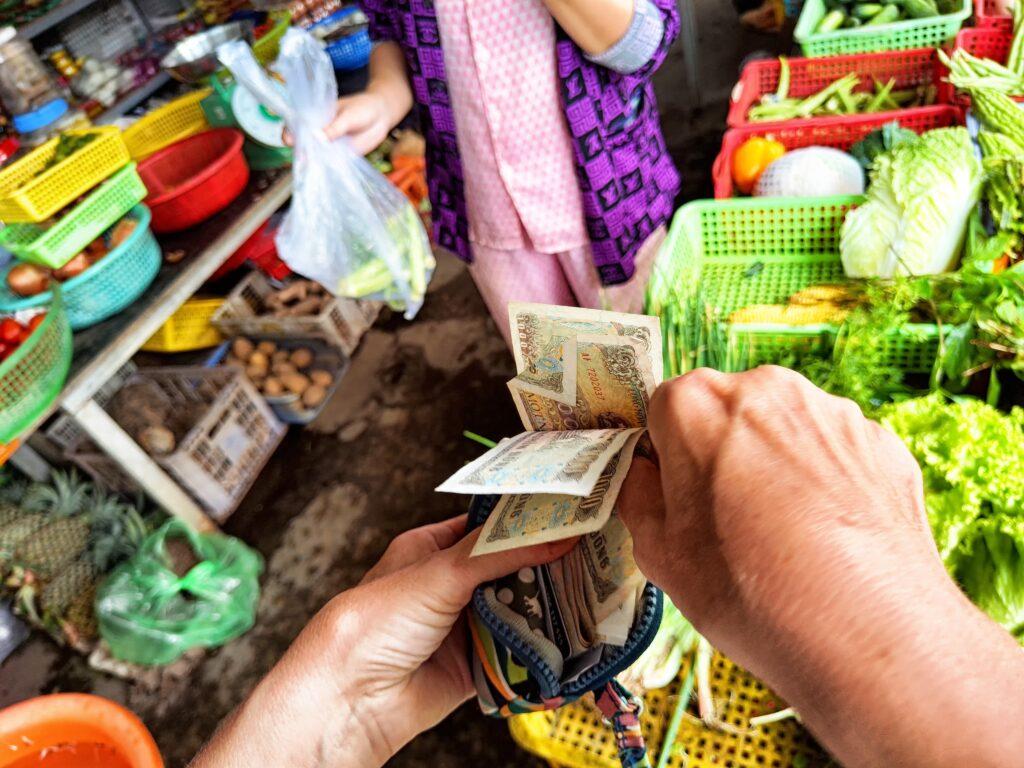
Vietnam is mostly a banknote economy.
You are far more likely to handle Vietnamese dong banknotes than coins, and the common notes in circulation range from small everyday denominations to high-value notes such as 500,000 VND.
That matters because everyday transactions can involve a lot of counting zeros, especially at first.
A street food meal might cost only a small slice of a larger note, while hotels and bigger purchases naturally climb faster.
Why the numbers look so dramatic
One of the first things people notice when visiting Vietnam is that the numbers look huge.
That is not because everything is wildly expensive.
It is because the dong has a low unit value against currencies like the pound or the dollar.
So a coffee, a taxi ride, or a bowl of noodles can involve numbers that look dramatic but still represent everyday prices.
Once you have paid in Vietnamese dong currency a few times, it starts to feel normal.
How people actually pay in Vietnam
Vietnam is modern in some ways and still very cash-friendly in others.
In major cities, many hotels, cafés, malls and larger businesses accept cards, but street vendors, local markets and smaller places often prefer cash transactions.
That is why the best money strategy is usually flexible rather than ideological.
Bring some Vietnamese dong for daily use, then use cards where it genuinely makes sense.
Cards in Vietnam: when they help and when they do not
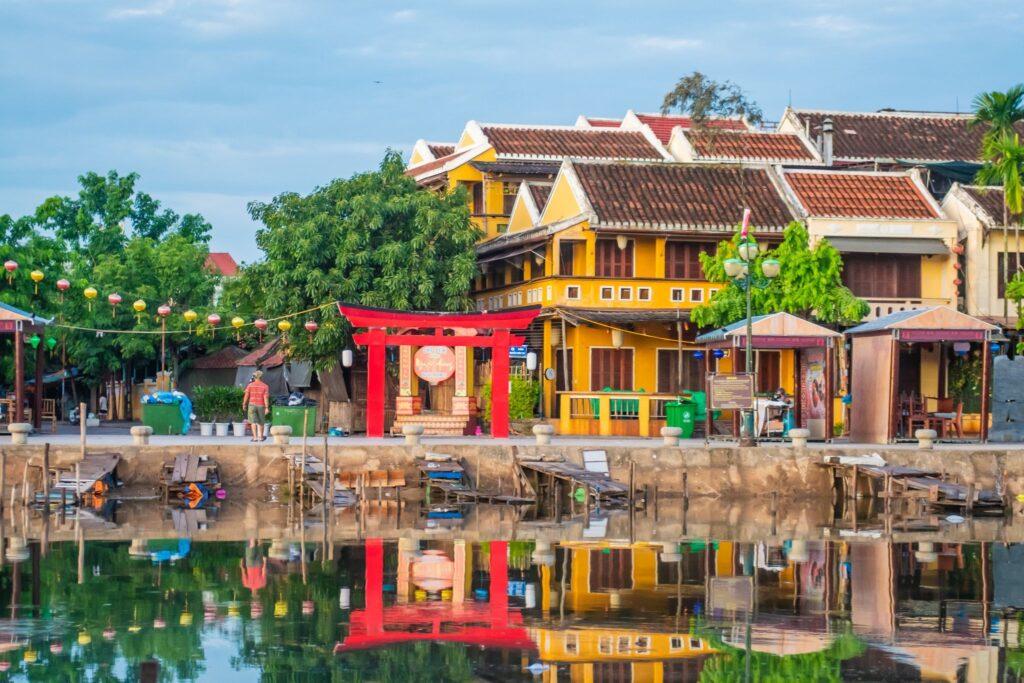
Cards in Vietnam are useful, especially in tourist areas, luxury hotels, and many restaurants in places such as Ho Chi Minh City and Hoi An.
Major providers like Visa are commonly accepted in those settings, and both credit card and debit card use is now common enough that you will not feel stuck in the past.
But this is not a place where card usage is universal.
For small purchases, market shopping, transport and plenty of local food stops, cash still wins.
ATM withdrawals, withdrawal limits and rural areas
If you plan on withdrawing cash, Vietnam has plenty of ATMs, but you should still be strategic.
ATM withdrawals can incur local bank charges, your own bank’s overseas fees, and sometimes withdrawal limits that require multiple transactions to reach a larger amount. This matters more outside the main urban centres.
In rural areas, and in places like the Mekong Delta, it is smart to bring enough cash before you head off rather than assume there will always be a convenient way of withdrawing cash nearby.

Using a currency converter before you buy
A currency converter is useful before you buy, especially if you want a rough sense of Vietnamese currency to GBP or Vietnam currency to pounds.
It helps you understand whether current Vietnam currency rates look better or worse than the last time you checked, and it is a good way to double check what your pounds might get you.
Just remember that currency conversion tools are a guide, not a promise.
A retail provider may add margin, delivery costs or other charges when you buy Vietnamese dong currency.
Vietnam currency exchange rate basics
The Vietnamese dong exchange rates you see online are not always the exact rate you will get in practice.
That applies whether you are checking the British pound to Vietnamese currency exchange rate, the sterling Vietnam dong exchange rate, the Vietnamese currency to pounds rate, or comparing a provider’s offer with broader market exchange rates.
The useful question is not just “what is the rate today?” It is “what will I actually receive after the full cost is included?”
That is where good deals and poor ones part company.
How to compare Vietnam currency exchange options
When you compare Vietnam travel money exchange options, look beyond the headline rate.
Hidden fees, delivery charges and poor margins can create unfavourable exchange rates in practice, even when the first number looks attractive.
The best way to compare is to look at the final amount of Vietnamese dong you receive for the same amount of pounds, not just the splashiest rate on the page.
That is also the simplest way to spot genuinely competitive rates.

What is the best currency to take to Vietnam?
For most travellers, the best currency to use in Vietnam is the Vietnamese dong.
That is what you will use for most everyday spending, and it saves you the awkwardness of trying to use other currency for normal purchases.
Some travellers like carrying a small amount of other foreign currencies, such as US dollars, as a backup, but for day-to-day travel, the dong is still the practical winner, and it’s a good idea to exchange GBP to VND before you go.
It is also the best currency for Vietnam if you want fewer awkward moments at markets, cafés and taxis.
Is it better to buy dong in Vietnam?
Not always. Some people assume it is automatically better to buy Vietnam dong currency after landing, but that depends on the rate available, where you are exchanging, and how rushed you are.
If you wait until arrival, you may end up changing money at an airport, at a hotel desk, or in a hurry, which is not always where the best value is found.
Converting some pounds to Vietnam currency in advance can make the first day much smoother, especially if you need cash straight away for transport, food or tips.
Top tip: Manor FX can help you convert Vietnam currency to GBP if you get back to the UK with dong in your wallet.
A short note on history, North Vietnam and South Vietnam
Vietnam’s currency history mirrors the country’s political history.
During the era of French Indochina, earlier forms of colonial money were used; later, the division between North Vietnam and South Vietnam led to each having its own currency.
After the Vietnam War, the country moved towards a unified system built around the modern Vietnamese dong.
You do not need to know any of that to buy a coffee or pay for a taxi, but it does explain why the history of money in Vietnam is tied so closely to the history of the country itself.

Latest government travel advice and money safety tips
Before you travel, check the latest government travel advice.
It is also wise to think about money safety in practical terms.
Split your cash, keep cards separate when possible, and take normal precautions in busy tourist hotspots.
Good security is not glamorous, but it does matter.
If you lose cash, there is not much to recover. If you lose a card, you at least have options.
Where to buy Vietnamese dong in the UK
| Option | What to expect |
| Specialist bureau (online) | The simplest option for less common currencies: compare rates and order ahead. Get the best rates and swift home delivery with Manor FX. |
| High street banks | Some currencies may need ordering in advance; availability can vary by branch. |
| Post Office | Stocks a range of travel money, but less common currencies may be limited or unavailable. |
| Airport exchange | Convenient, but higher costs; stock of rarer currencies can be unpredictable. |
Buy your dong now

How to get your Vietnam travel money with Manor FX
Save money, no hidden fees and free delivery
If you want to buy Vietnamese dong before you travel, Manor FX offers a simpler option than leaving it until the last minute.
You can order online, choose how many dong you want, review the full cost, and pick home delivery or collection.
That means you can sort your travel money before you set off, rather than scrambling for currency exchange after arrival.
It is also a cleaner way to compare offers and keep your budget under control.
Another plus is convenience. If Vietnam is only one stop on a wider Asia trip, you can sort multiple currencies in one go rather than juggling separate orders.
That can help you save money on admin and make the whole travel-prep process feel less messy.
We can even help you convert lany leftover VND to GBP when you get back.
A simple rule for spending in Vietnam
Use Vietnamese dong for everyday payments; expect cash to matter more than you think; use cards where they genuinely help; and keep an eye on fees whenever you are exchanging or withdrawing.
Vietnam is not especially hard to handle once you understand the rhythm of how money works there. The main trick is not to overcomplicate it.

FAQs
You can buy Vietnamese dong from specialist travel money providers like Manor FX before you travel, including online services like ours that offer home delivery or collection.
The safest option is usually a reputable, regulated provider such as Manor FX that shows the full cost clearly and does not bury charges in the small print. Buy Vietnamese dong now.