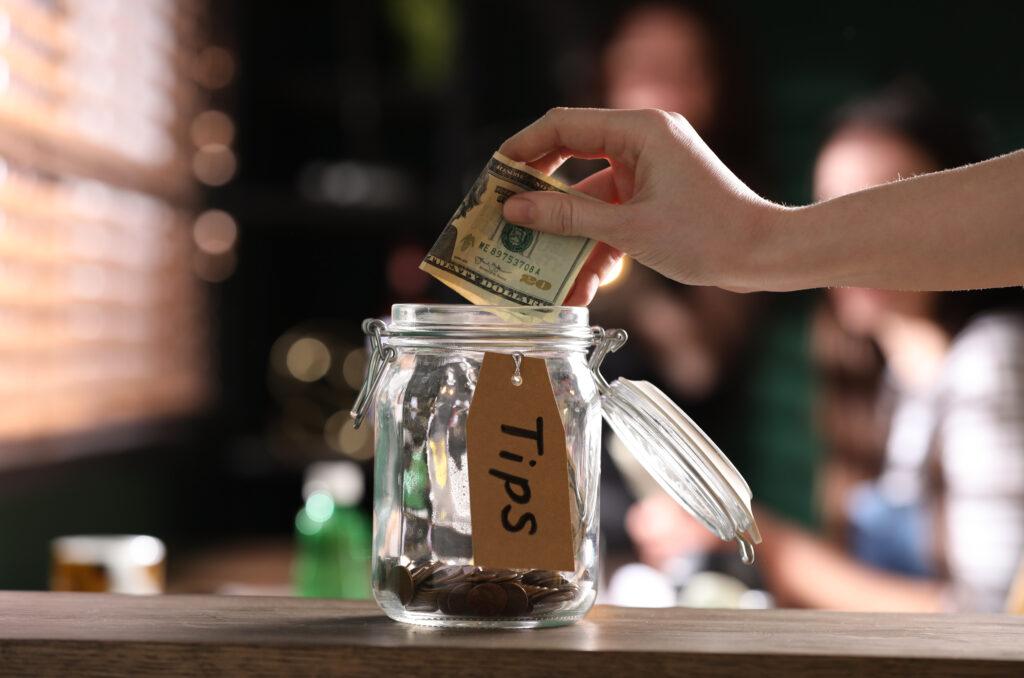

The world tip jar: a guide to tipping around the world
When you travel, you end up carrying a different kind of money than you do at home. Not just a different currency, but a different sort of cash.
Small notes for taxis. Coins for coffee. A few low denominations tucked away for hotel staff, tour guides, or the quick “keep the change” moments that happen when you are tired, grateful, or in a rush.
That is the world tip jar.
Not one literal jar, but the mix of places where small bits of travel money get left behind.
Café counters. Restaurant bill folders. Taxi trays. Hotel desks. Tip bowls near a till. Envelopes for housekeeping. Pockets emptied at the end of a trip.
If you look at those places closely, you start to notice something interesting. Some currencies turn up again and again, and they usually tell you something practical about how tipping works in that part of the world.
So this is not just a guide to tipping customs, local etiquette, or how much to tip abroad. It is a guide to the money that moves through those moments.
The currencies travellers actually use for tips, why some notes and coins suit the job better than others, and what to do with any leftover travel money once you are home.
Tipping rules abroad are usually less about perfect percentages and more about carrying the right kind of cash.
Quick facts: the world tip jar
| Best currency for tipping | Usually local currency |
| Most common tip jar money | Small notes and coins already in your travel wallet |
| Likely currencies | Euros, dollars, pesos, baht, and dirhams |
| Most common tipping settings | Taxis, cafés, hotel desks, bars, and guided tours |
| Why small denominations matter | They make tipping easier and avoid awkward overpaying |
| What to do with leftover notes | Exchange eligible foreign currency back into pounds with Manor FX |
| Simple tip | Keep them, donate them, or use Leftover Currency |
Why tipping abroad confuses so many Britons
There is a reason this topic makes Britons unsure about tipping while on holiday abroad.
At home, you can usually muddle through with instinct. Abroad, that instinct suddenly stops being reliable.
One bill already includes a service fee. Another does not. One taxi driver seems to expect you to round up. Another waves it away.
In one country, leaving a little extra is ordinary – it’s customary to tip. In another, it may be unnecessary or even awkward.
Add exchange rates, unfamiliar notes, and the cash tip or card tip abroad question, and it is easy to see why British travellers end up second-guessing themselves.
The trouble is that people often treat tipping as a moral test when it is really a travel-money problem.
Most of the time, what matters is not grand generosity. It is whether you understand the local rhythm.
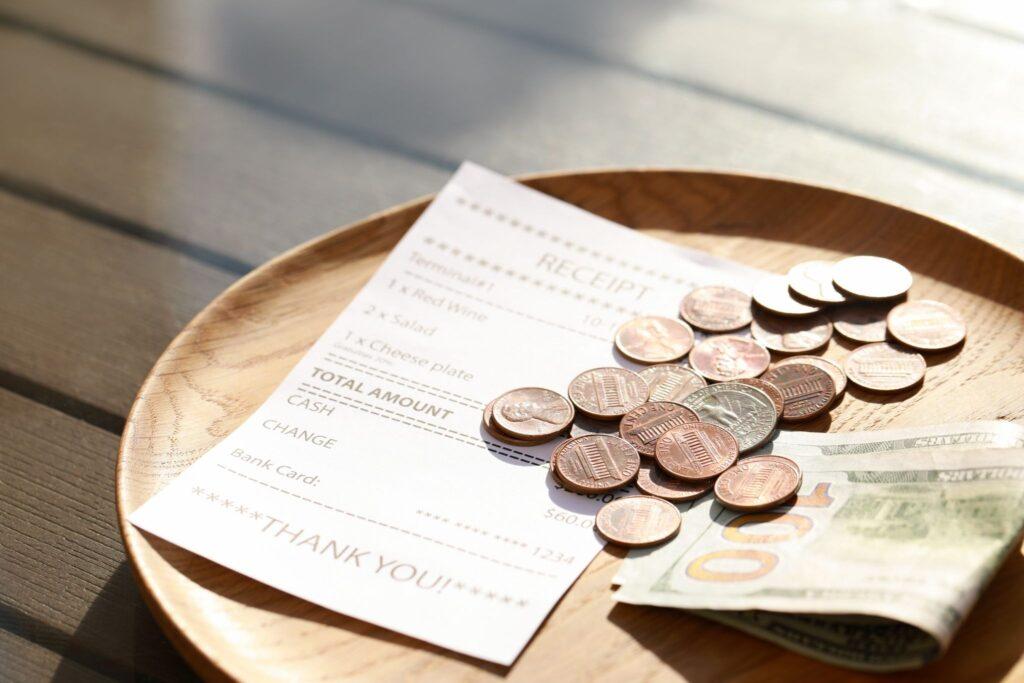
What actually ends up in the world’s tip jars
If you tried to build a real global tip jar from the currencies travellers most often leave behind, a few would probably stand out.
Euros would be near the top.
In much of Europe, tipping often means rounding up or leaving a little change rather than applying a large percentage, so euro coins and small notes naturally accumulate in cafés, bars, taxis, and casual restaurants.
In much of Europe, cab tipping often works by rounding up the fare, and tipping is generally modest and situational.
US dollars would be close behind.
In North America, tipping is woven into daily service culture, so dollars pile up visibly in restaurant folders, café jars, bars, hotels, and transport.
Dollars also show up in tourist-heavy places outside the US simply because travellers recognise them and often carry them as backup cash.
Then come the local workhorses: pesos, baht, dirhams, and other small denominations that suit everyday tipping moments.
These are the currencies people already have in hand when the need arises. They are practical, familiar on the ground, and easy for the person receiving them to use straight away.
That is really the key idea behind the world tip jar.
People do not tip with some abstract ideal currency.
They tip with what is already in the side pocket of the travel wallet.
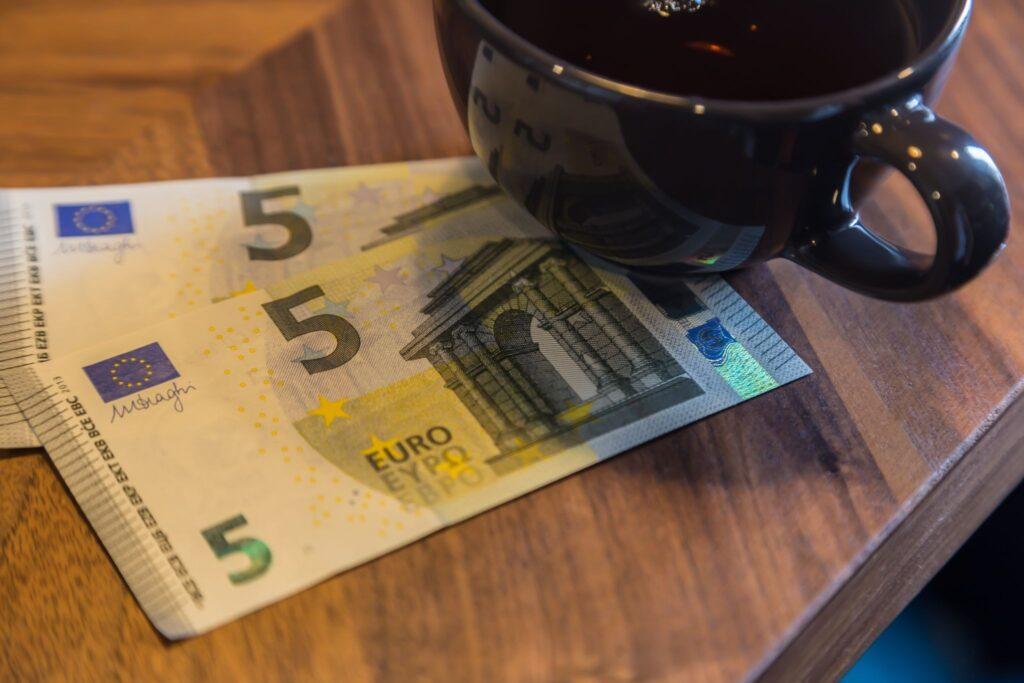
Tipping in Europe and why euros suit the tip jar so well
If one currency feels especially at home in the world tip jar, it is the euro.
That is partly because tipping in Europe often works through small gestures rather than big shows.
Across many European countries, people may round up the total bill a small amount to the nearest euro, leave a coin or two, or tip a helpful cab driver by rounding up the fare rather than reaching for a fixed percentage.
In France, the phrase “service compris” signals that the bill includes a service charge, so extra tipping is usually a gesture rather than a requirement.
Euros also benefit from scale. Travellers carry them across multiple countries, which means more cafés, more hotel desks, more short taxi rides, and more chances for those little “keep the change” moments.
That is why so many European tip jars feel coin-led. Think café counters in Spain, quick lunches in Italy, bars in Portugal, brasseries in France, or hotel counters in Austria and Germany.
The money that ends up there is usually the money that is already loose, already practical, and already part of the day’s small spending.
This does not mean Europe runs on one single rulebook. Tipping by country still matters.
But as a broad pattern, Europe is where the world tip jar often looks like a small pile of coins, low-value notes, and low-drama round-ups.
Tipping practises in South America and why small notes matter
In South America, the world tip jar often looks less like a pile of coins and more like a handful of useful notes, whether that means Brazilian reais, Colombian pesos, Peruvian soles, Chilean pesos, or Argentine pesos.
That is because cash still plays an important role in many everyday service interactions.
Travellers may tip in restaurants, for porters, for guides, and for drivers, but the amounts are often modest and practical.
Small notes are easier to use, easier to hand over, and more useful to the person receiving them than a pocketful of change.
This is where low denominations come into their own.
A few smaller notes can cover taxi rides, tips for tour guides, or quick thank-yous to hotel staff without forcing anyone to break a large bill.
The point is not drama. It is ease.
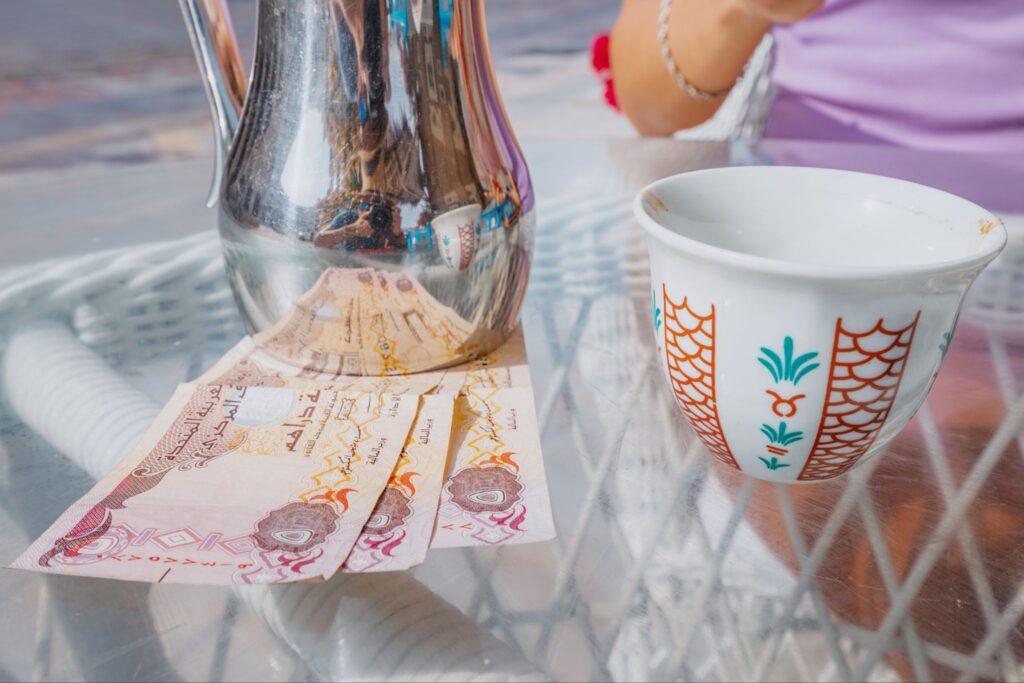
Tipping in the Middle East and the value of small local notes
Across the Middle East, tipping often occupies a practical middle ground, where it is neither highly formal nor entirely absent.
In tourist-facing settings, a small tip for hotel staff, taxi drivers, or tour guides is often well understood.
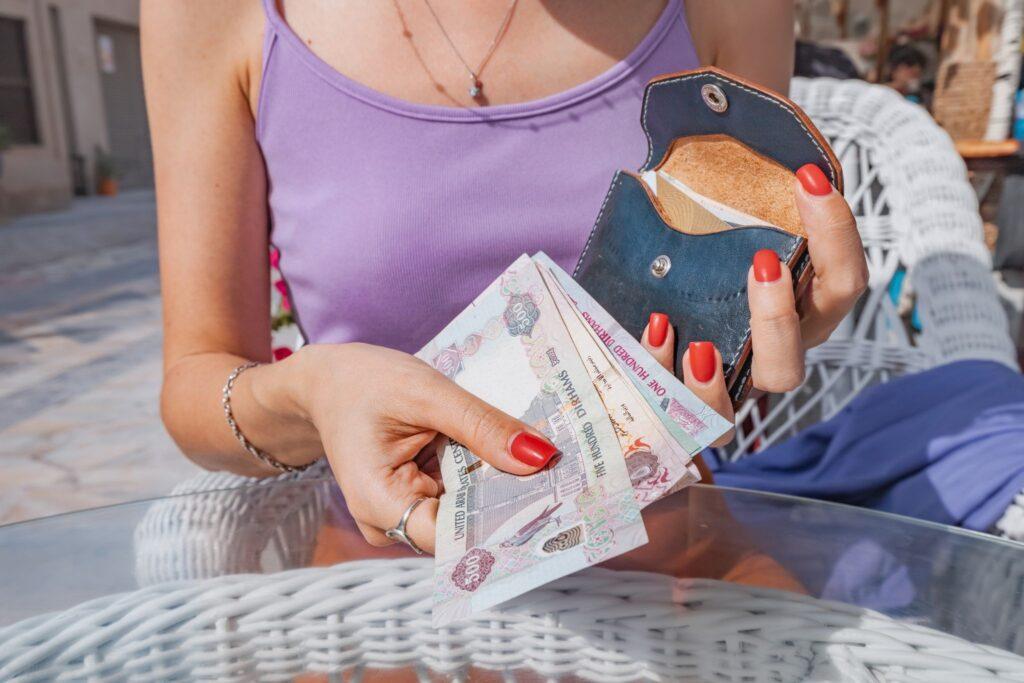
In places like Dubai, official visitor guidance says it is customary to leave a tip in many situations, though not compulsory, and explicitly states that the UAE dirham is preferred over other currencies for tipping.
That matters because it brings the world tip jar back to local money.
In the Gulf, smaller notes in dirhams are usually more useful than trying to improvise with foreign cash.
Like South America, this is a part of the world where the tip jar often fills with practical notes rather than leftover coins from some other trip.
China, Japan, South Korea, and places where the jar stays lighter
Not every destination feeds the world’s tip jar in the same way.
In Japan, official tourism guidance says tipping is not customary and will often be met with confusion.
According to the same official guidance notes, there is generally no need to tip in hotels, either, even in luxury hotels.
South Korea’s tourism guidance similarly states that tipping is neither required nor expected in Korean restaurants.
That does not mean the level of service provided is less good. It just means the appreciation is expressed differently.
In these places, the world tip jar stays lighter not because people are ungenerous, but because the culture around service charges and service industry workers operates differently.
Sometimes the best move is simply to pay the bill, say thank you, offer a genuine smile and leave it there.
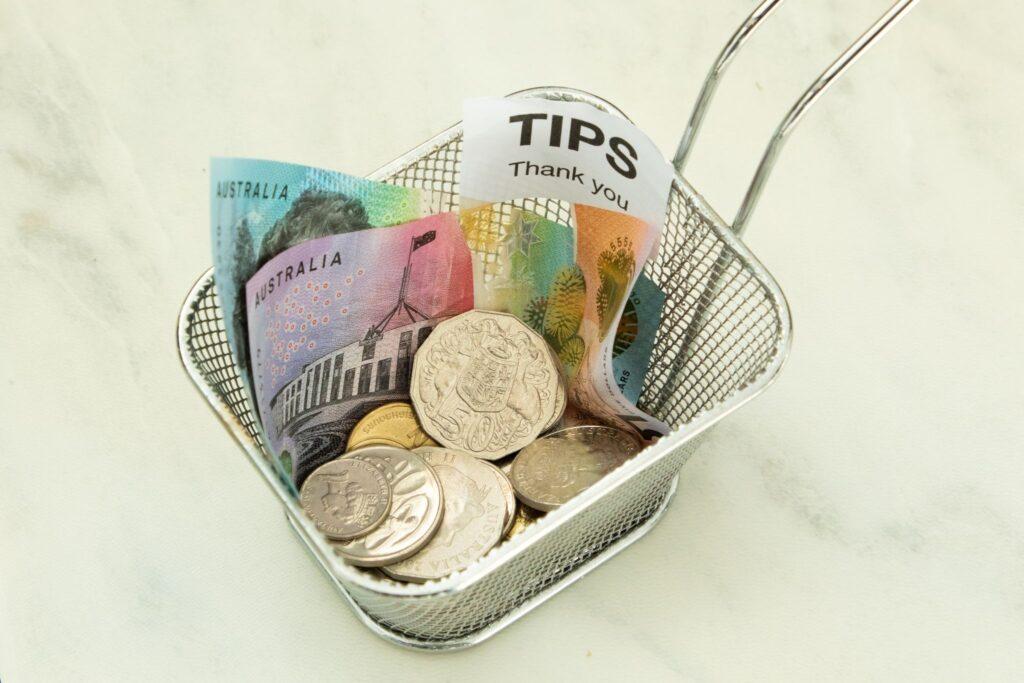
Australia tipping and why the tip jar stays low-pressure
Australia is another useful contrast. Tipping exists, but it usually feels lighter and less built into everyday life than it does in the US.
In restaurants, a modest extra amount can be a nice gesture for good service or exceptional service, but it is not normally treated as an automatic rule.
In taxis, people may round up. In bars or cafés, a jar may be present to tip waiting staff, but it rarely exerts the same pressure.
That makes Australia a good example of a place where the tip jar exists without dominating the culture.
The gesture is there, but it remains optional and low-drama.
North America and the world’s most visible tip jar
If you want to see the world tip jar in its most visible form, look to North America.
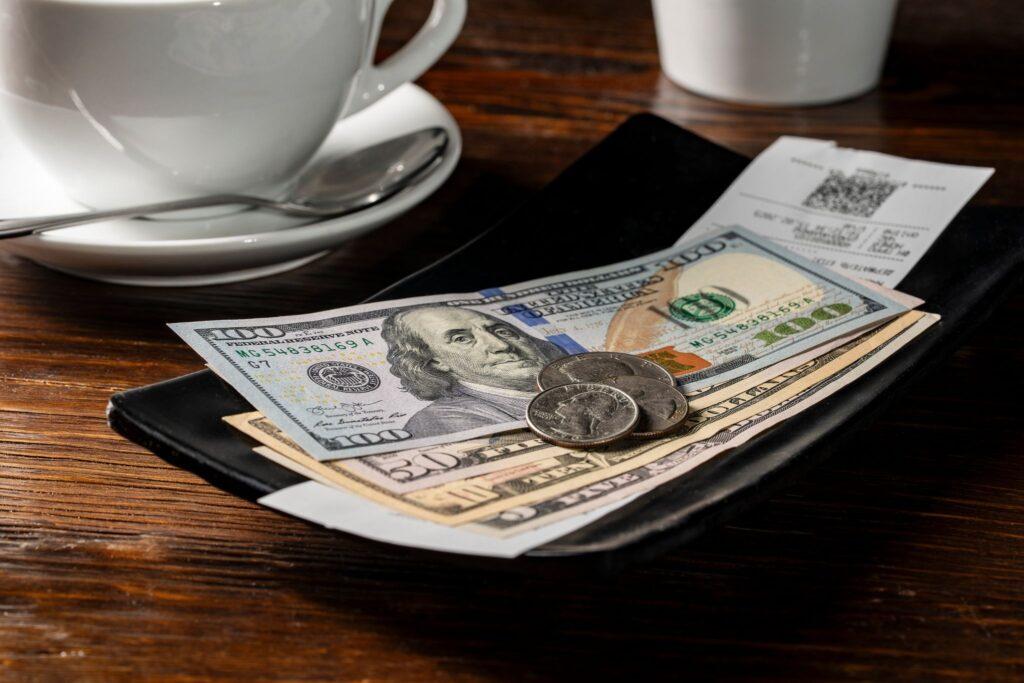
The jar on the counter is not subtle. The card machine may prompt you for a tip. The receipt may even include a line for you to add one.
In restaurants, bars, cafés, hotels, and transport, the expectation is clearer and the tipping culture more explicit. That is why dollars pile up so easily in these settings.
This is also where the economics of the service industry and other service providers most visibly shape tipping.
In parts of the United States, tips are not just a pleasant extra. They are tied to how hospitality work is paid and understood.
Service workers are often paid minimum wage or close to it and expect tips to round out their income.
That makes the dollar one of the clearest “currencies in the wild” in the world tip jar story.
Where the world tip jar really fills up
Regions matter, but so do settings. Across all kinds of destinations, the same three service moments keep cropping up: taxis, hotels, and guided trips.
These are the places where travellers are most likely to need low denominations, leave small cash tips, and end up with leftover change or notes by the end of a trip.
Taxis
For taxi drivers, the single most useful habit to understand is this: many people simply round up the fare.
That happens in Europe, in parts of the Middle East, and in plenty of other places.
It is easy, quick, and avoids unnecessary fuss. This is why taxis are such a constant source of small tipping moments and leftover change.
Hotels
Hotel staff often get tipped in cash because so many hotel interactions happen away from a card terminal.
Think housekeeping, room service, a concierge favour, or help with luggage.
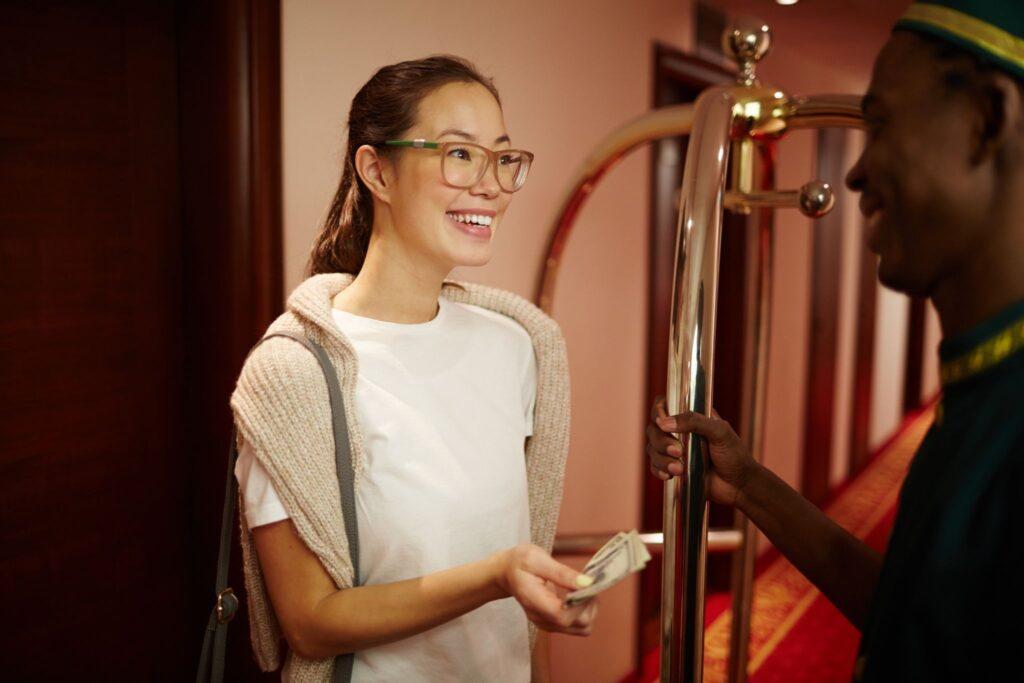
Hotel porters are especially tied to low-denomination tipping because travellers often think in terms of a modest amount per bag, which only works smoothly if they have the right notes.
Tour guides
For tour guides, notes usually make more sense than coins.
By the end of a day trip or walking tour, travellers are more likely to hand over a clear, intentional amount than fish around for change.
That is why tipping tour guides often feels a little more planned than tipping at cafés.
If guides are part of your trip, it is worth carrying the right notes from the start.
What is the best currency to tip with abroad?
The best currency to tip with is usually the local one.
That’s not just tipping etiquette abroad. It is practical.
Local money is easier for the recipient to spend, avoids the hassle of exchange, and fits the setting better.
Dubai’s official tipping guidance, for example, makes it clear that the UAE dirham is preferred, even though people may accept dollars or other currencies.
Travellers do sometimes leave foreign cash behind, especially in heavily touristed places.
But as a general rule, local notes and coins are the cleanest, most useful option.
The world tip jar may contain a mix, but the smartest traveller does not assume the mix is always helpful.
Why small denominations should be part of your travel money plan
The most practical travel money is not just the headline amount. It is the shape of it.
If you know you will be using taxis, staying in hotels, doing tours, visiting cafés, or spending time in places where cash still matters, low denominations are worth planning for.
Small notes make holiday tipping easier. They make rounding up the fare moments easier. They help with hotel porters, housekeeping, and all the little service interactions that never show up in the glossy version of travel.
Manor FX offers more than 160 travel money rates and simple, fast online ordering with home delivery or click and collect, making pre-trip planning easier than relying on whatever change you happen to scrape together at the airport.
Where to buy travel money in the UK
| Option | What to expect |
| Specialist bureau (online) | The simplest option for less common currencies: compare rates and order ahead. Get the best rates and swift home delivery with Manor FX. |
| High street banks | Some currencies may need ordering in advance; availability can vary by branch. |
| Post Office | Stocks a range of travel money, but less common currencies may be limited or unavailable. |
| Airport exchange | Convenient, but higher costs; stock of rarer currencies can be unpredictable. |
Buy your travel money now
The other half of the story: leftover travel money
Of course, the world tip jar is not just about where small notes and coins go. It is also about what comes back.
If you are sensible with your spending, you’ll sometimes return home with leftover foreign currency.
A few notes kept for taxis. Change that never got spent. Cash set aside for tips that turned out not to be needed after all.
That is why unused travel money is so common. The same small denominations that make travel easier are often the ones people bring home again.

Sell leftover foreign currency with Manor FX
If you come home with notes you did not use, Manor FX can help you sell unused travel money and turn eligible leftover foreign currency back into pounds.
That is often the most practical option if you carried extra cash for taxis, tips, small purchases, or day trips and did not spend it all.
Instead of leaving those notes in a drawer, you can exchange unused travel money and put the funds back into your next trip or back into your bank account.
If you come home with notes you did not use, Manor FX can help you exchange eligible leftover currency back into pounds.
Check out how to exchange leftover foreign currency here.

What to do with spare foreign coins and leftover notes
Coins are the awkward bit. Many travel money providers are set up around notes, not handfuls of small loose change, especially for less widely traded currencies.
If you have spare coins as well as notes, Manor FX’s sister company, Leftover Currency, is the more useful route.
It buys foreign coins and banknotes for cash, including some obsolete currency, and its charity option lets you donate any banknotes or coins, with the exchange value plus 5% added to charity.
So if you come home with holiday change rattling around in a pocket or wash bag, you have a few sensible options.
Keep it for your next trip, exchange what you can, or donate it rather than letting it gather dust.

Simple holiday tipping guidelines, without the panic
If you want the shortest possible guide to tipping abroad, here it is.
- Check whether service charges are already included in the bill.
- Use local cash where you can.
- Carry a few small notes for taxis, hotel staff, and day-to-day tipping moments.
- In some places, it is enough to round up the fare or leave a little change for great service.
- In others, a modest note makes more sense.
- And in places like Japan or South Korea, do not force a tip where it is not really part of the culture, even if you receive excellent service.
Most of the time, a calm, practical approach works better than a dramatic one.
Takeaways from the world tip jar
The real lesson of the world tip jar is that tipping while travelling abroad is not just about manners. It is about how travel money actually behaves.
The money that ends up in tip jars is usually the everyday stuff: euro coins in cafés, dollar bills in hotel folders, pesos and baht used for taxis or quick tips, dirhams handed over in the Gulf, and the low notes travellers keep within easy reach.
These are the currencies in the wild. The useful ones. The ones that help a trip move smoothly.
Look at what people leave behind, and you learn something real about a place.
You see which destinations run on coins, which rely on small notes, which prefer quiet round-ups, and which barely use tips at all.
That is what makes the world-tip-jar idea interesting. It is not just about what travellers spend.
It is about the small, practical bits of money that move through a trip, and sometimes come home again.

FAQs
The honest answer is that cash still wins in lots of places.
Card tipping is growing, especially in cities and bigger venues, but cash remains the easiest option for taxi drivers, hotel staff, guides, porters, and small independent places.
A cash tip is immediate. It lands directly. It does not get tangled up in systems or delayed payouts.
That is why a sensible travel money plan still includes a little local cash even if you are mostly paying by card.
The best currency to tip with is usually the local one.
There are exceptions in some heavily touristed places where dollars are widely accepted, but local cash is generally the cleanest, most respectful choice.
It fits the setting, is useful to the recipient, and avoids turning a quick thank-you into a problem.
For travellers, that is also the easiest rule to remember. If you are going to tip, tip in the money people actually use there.
How much to tip depends on local customs, the setting, and whether a service charge is already included in the bill.
In many European countries, it is common practice to round up the bill or leave a few extra euros for good service.
To tip taxi drivers, many people simply round up the final fare. For hotel porters, a little per bag is often enough.
Not always. In some places, not tipping is considered rude. In others, it is not typically expected at all.
Good tipping etiquette means paying attention to local etiquette, tipping culture, and tipping practices.
In some Asian countries, including some China tipping situations and in South Korea, leaving money can feel awkward, while in parts of the Middle East or South America, a small tip is often generally appreciated.
If you have unused notes after travelling abroad, Manor FX can help you exchange eligible leftover currency back into pounds.
For coins, Leftover Currency is the better fit. That is often the easiest answer to where to exchange leftover foreign currency, especially if you come home with unused travel money from other countries or small amounts left over from taxis, tour guides, or restaurants and bars.
In coffee shops or with bar staff, a small tip is often enough if you get good service.
In higher end restaurants and other restaurants and bars, a standard tip is more likely, especially if no service charge is included in the bill.
Yes, hotel porters are often tipped per bag, especially in luxury hotels or larger city hotels. It is one of the simplest parts of tipping etiquette, and many travellers treat it as a standard practice./
It can be tricky to navigate local etiquette, but on group tours and some cruise lines, tipping tour guides is often considered polite, especially after excellent service.
These are the kinds of settings where service workers and service industry workers may regularly receive tips.
Many travellers tip taxi drivers by adding a little to the final fare, especially after short taxi rides. The same can apply to rickshaw drivers and parking valets in busy tourist areas and is considered polite.
If service is already included in the bill as a service fee or service charge, additional tipping of restaurant employees is usually optional rather than generally expected.
Some people still leave a small tip or a small additional payment for excellent service.
No, tipping customs can feel different in tourist areas than they do in quieter local spots.
Tipping culture also varies around the world, so what feels normal in other countries may not be the common practice in the place you are standing.